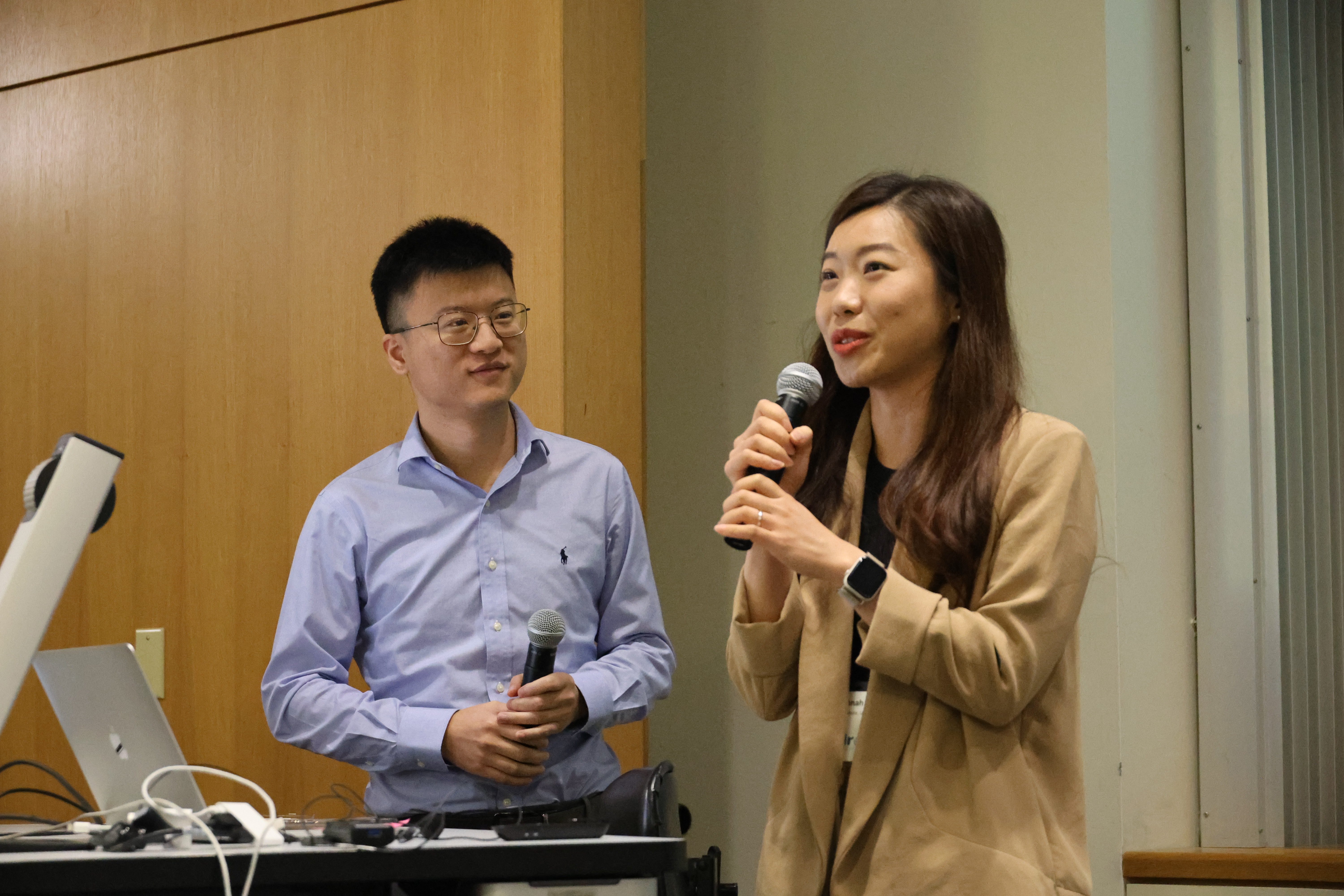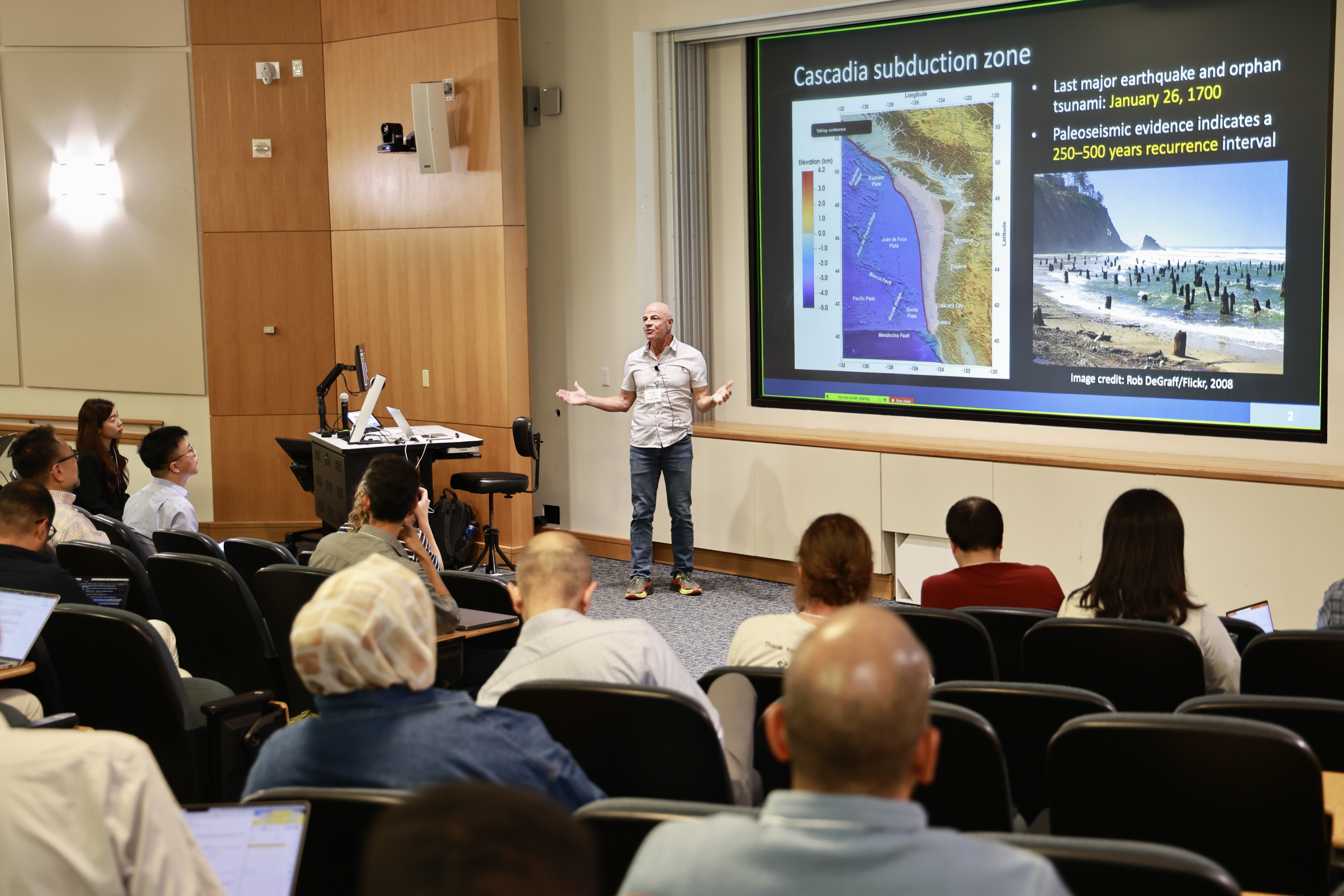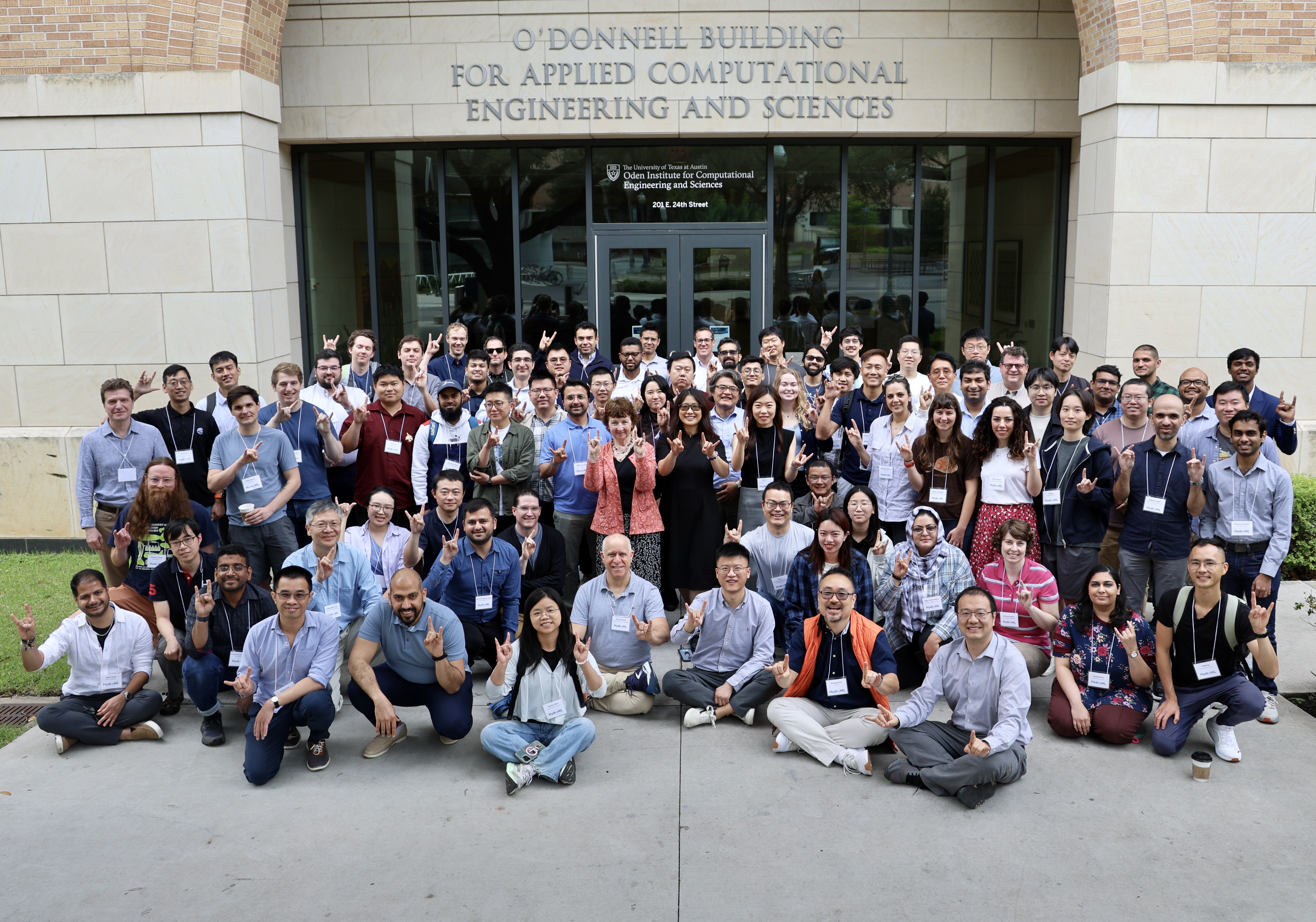
More than 120 researchers from across the country and around the world gathered in May at The University of Texas at Austin for the fifth HydroML Symposium, a three-day meeting that brought together researchers working at the intersection of artificial intelligence and machine learning in water and Earth sciences. This year's event was hosted by UT’s Oden Institute for Computational Engineering and Sciences and the Jackson School of Geosciences, bringing domain science and computational methods into closer conversation.
Hydrological systems are genuinely complex. Water moves across land surfaces, percolates through subsurface geology, and interacts with climate and vegetation in ways that are difficult to capture with traditional physics-based models alone. Data gaps, regional variability, and the scale of these systems all create challenges leading researchers to explore how machine learning can help. As the world's water supply grows more unpredictable — through both the overabundance or lack of water — floods, droughts, and storm surges — the need to better understand water and Earth systems only increases.
This is where HydroML and the partnership between geosciences and computational science comes into play. At UT, the Jackson School brings Earth science expertise, including knowledge of how these systems behave, what observations are meaningful, and what the models need to capture. The Oden Institute contributes the mathematical and computational tools, including machine learning frameworks and high-performance computing simulation, to extend what those models can do.