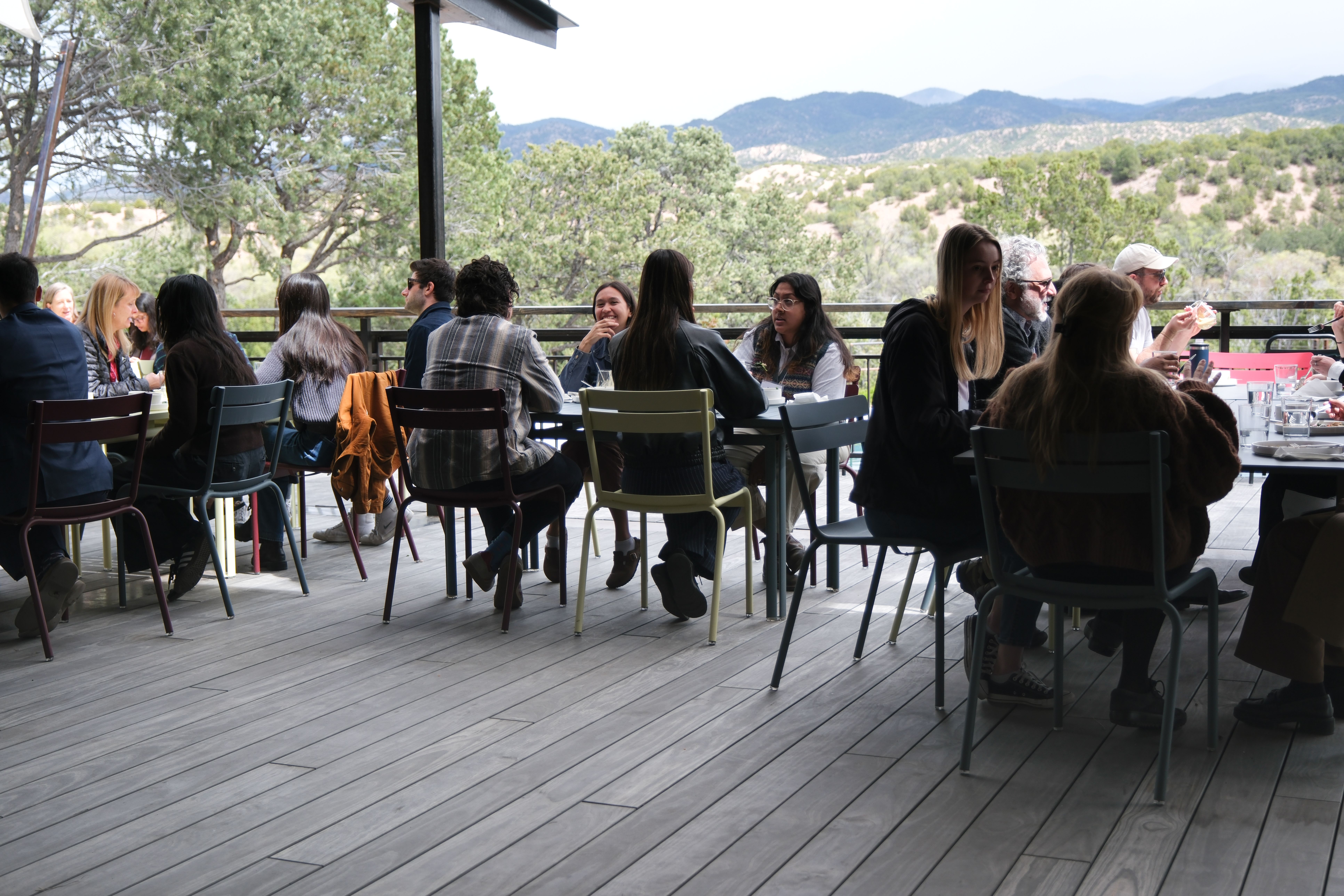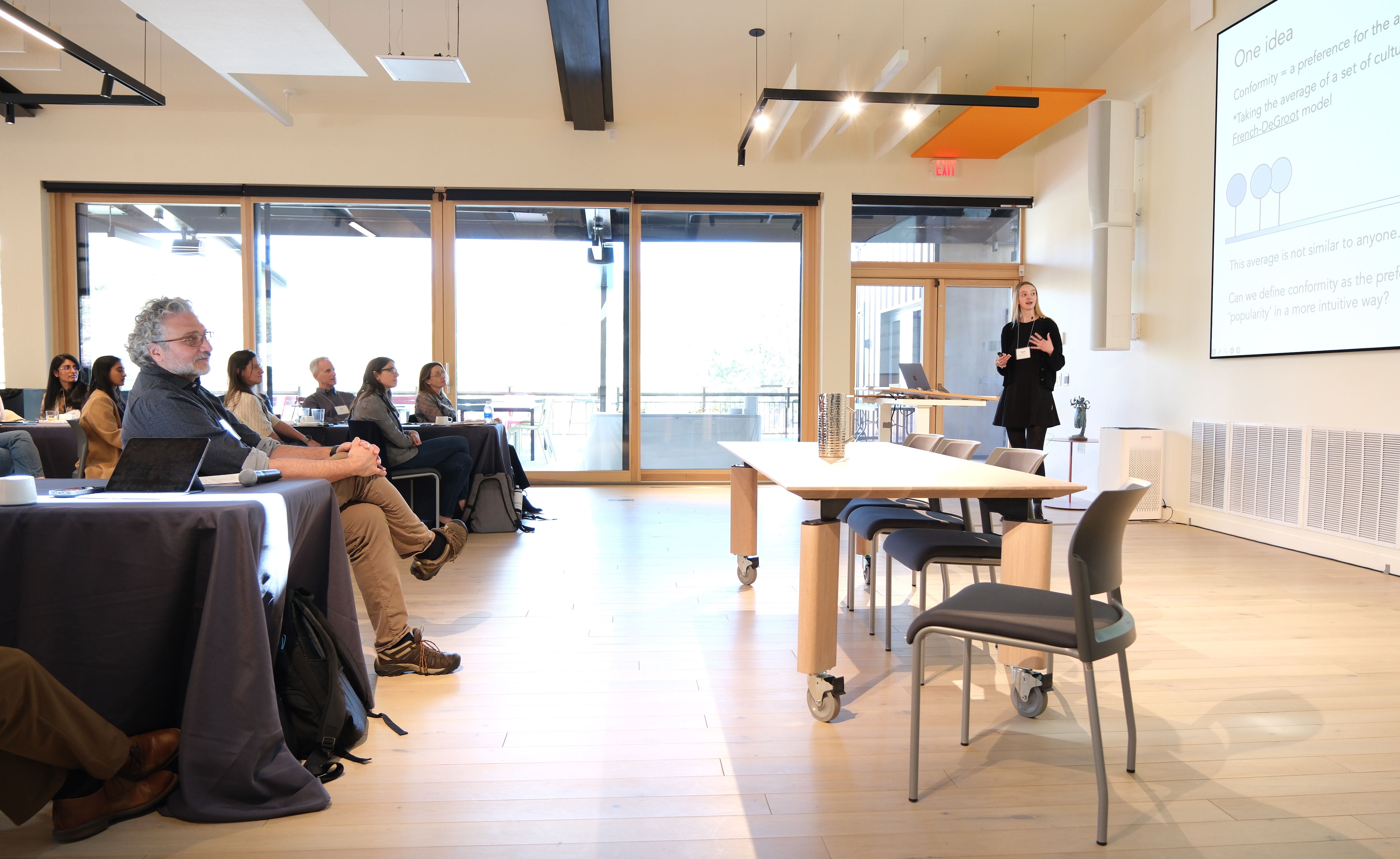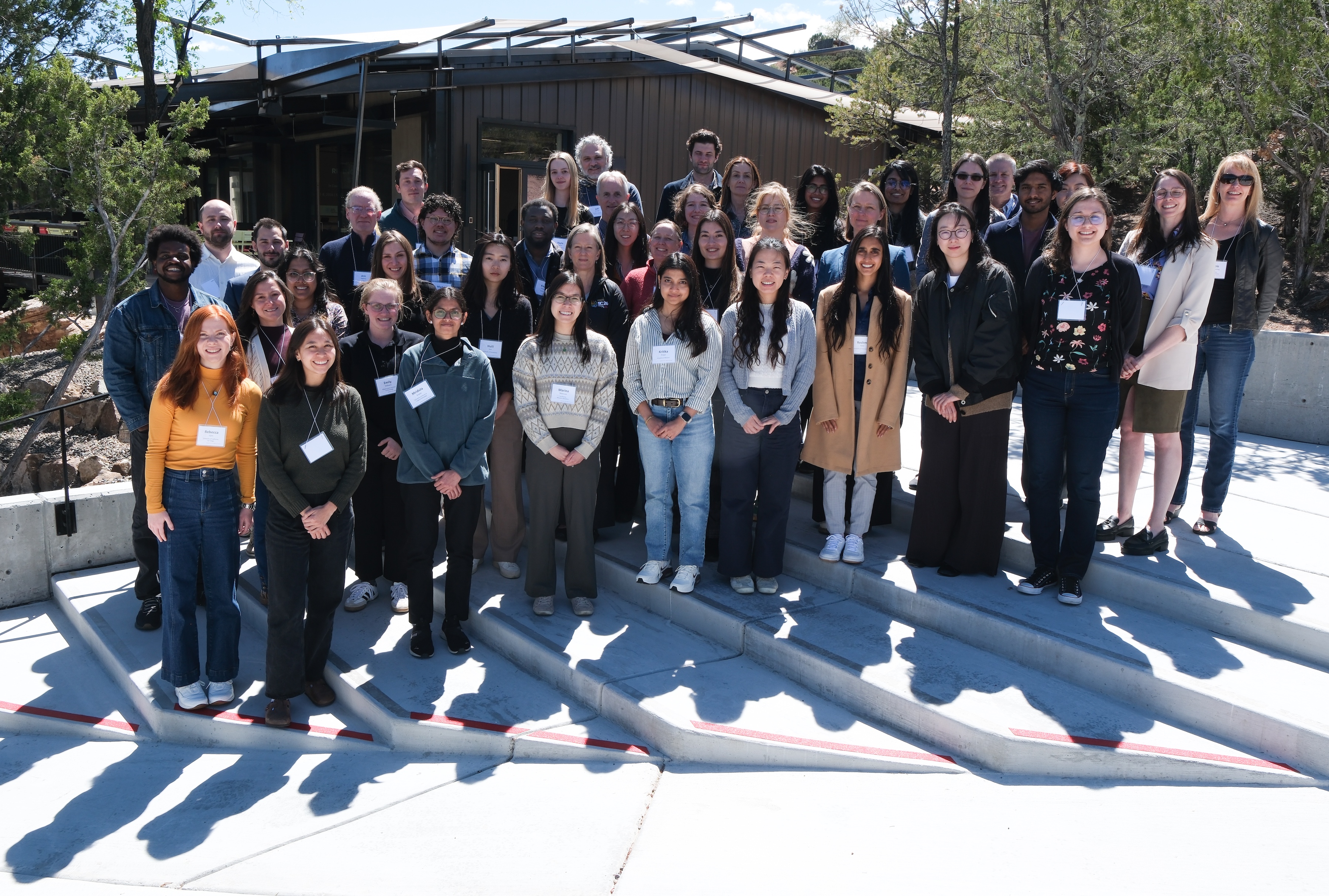
Early-career researchers gathered at the seventh annual Rising Stars in Computational & Data Sciences Workshop, a two-day conference held this year at the Santa Fe Institute (SFI) in New Mexico on April 7 - 8. The workshop includes career panels, research talks, and opportunities to connect with peers and leaders in the field. The workshop is hosted by the Oden Institute for Computational Engineering and Sciences, SFI, and Los Alamos, Lawrence Livermore, and Sandia National Laboratories.
Reshmi Patel, a University of Texas at Austin fourth-year Ph.D. student in Professor Tom Yankeelov’s Center for Computational Oncology at the Oden Institute, attended the workshop and said it offered both professional insight and a sense of community during a pivotal stage of her career.
Designed for researchers who are finishing or have recently completed their Ph.D.s, the event brings together participants who are preparing for their next career steps in academia, national labs, or research-focused organizations. “The Rising Stars workshop is a unique opportunity,” Patel said. “You are surrounded by a lot of people in the same career stage as you, looking to do the same things as you, and then, along with that, there are mentors and scientists who are leaders in their fields.”
Oden Institute Director Karen Willcox has been hosting Rising Stars in Computational and Data Sciences events since 2019, when the first event was hosted in Austin, TX. “The community built around Rising Stars is incredibly special,” said Willcox, noting that more than 200 early-career researchers have attended the seven events since 2019. “This year's event at the Santa Fe Institute brought a special emphasis on the interdisciplinary nature of computational and data sciences. It was wonderful to have early-career researchers drawn from so many disciplines, including a number from the social sciences.”
In addition to peer connection, the workshop emphasized exposure to a wide range of research applications unified by shared computational and mathematical methods. “Typically, when I go to conferences, they are focused on very specific topics, like mathematical modeling of cancer,” Patel said. “This one focused on mathematical and computational approaches across applications, and it was a good experience to get exposure to many fields and see how similar methods are being used across applications.”