University of Texas at Austin

News

New Conference Brings Together Experts in AI and Digital Twin Modeling for Earth Systems

By Olivia Castillo

Published Dec. 5, 2025

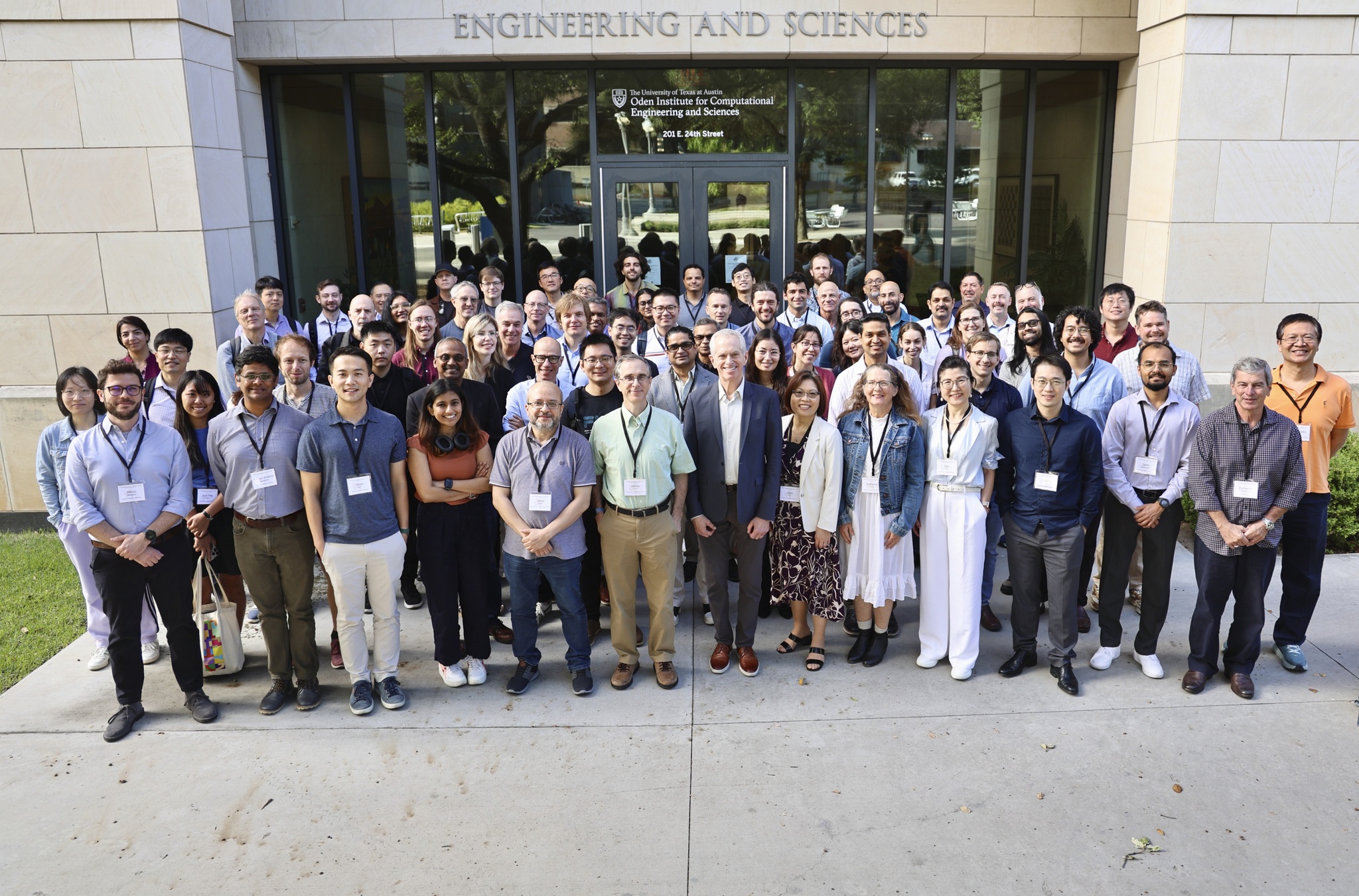
AIDT4ES attendees.

The first Artificial Intelligence and Digital Twins for Earth Systems (AIDT4ES) Workshop, co-hosted by the Oden Institute of Computational Engineering and Sciences in conjunction with the U.S. Association for Computational Mechanics (USACM) Energy and Earth Systems (EE&S) Technical Thrust Area, was held Sept. 22 - 24, 2025. Capitalizing on the exponential growth of artificial intelligence and machine learning (AI/ML) over the past decade, the workshop brought together scientists aiming to integrate these technologies into Earth systems modeling through the use of digital twins.

With nearly 100 participants, the 3-day workshop held at the Oden Institute at The University of Texas at Austin, included presentations and poster sessions, and provided a platform to illustrate how digital twins can be used in the ever-changing environment of Earth systems. Digital twins, virtual replicas of a physical system that continually update with data from their twin, are being used across disciplines from building bridges to studying Earth systems — and have been proven to be an efficient tool to save resources and to predict behavior in real-time. For Earth systems, digital twins have the potential to save lives through improved forecasting to provide earlier warning systems.

Ivana Escobar, a graduate student at the Oden Institute who develops digital twins of oceans, remarked, “What you’ll see at this conference is really powerful solutions to problems where certain aspects are simplified in order to get a better, faster, or cheaper result.” Escobar works with Patrick Heimbach, professor of Earth and Planetary Sciences and lead of the Computational Research in Ice and Ocean Systems Group at the Oden Institute. 
block.caption

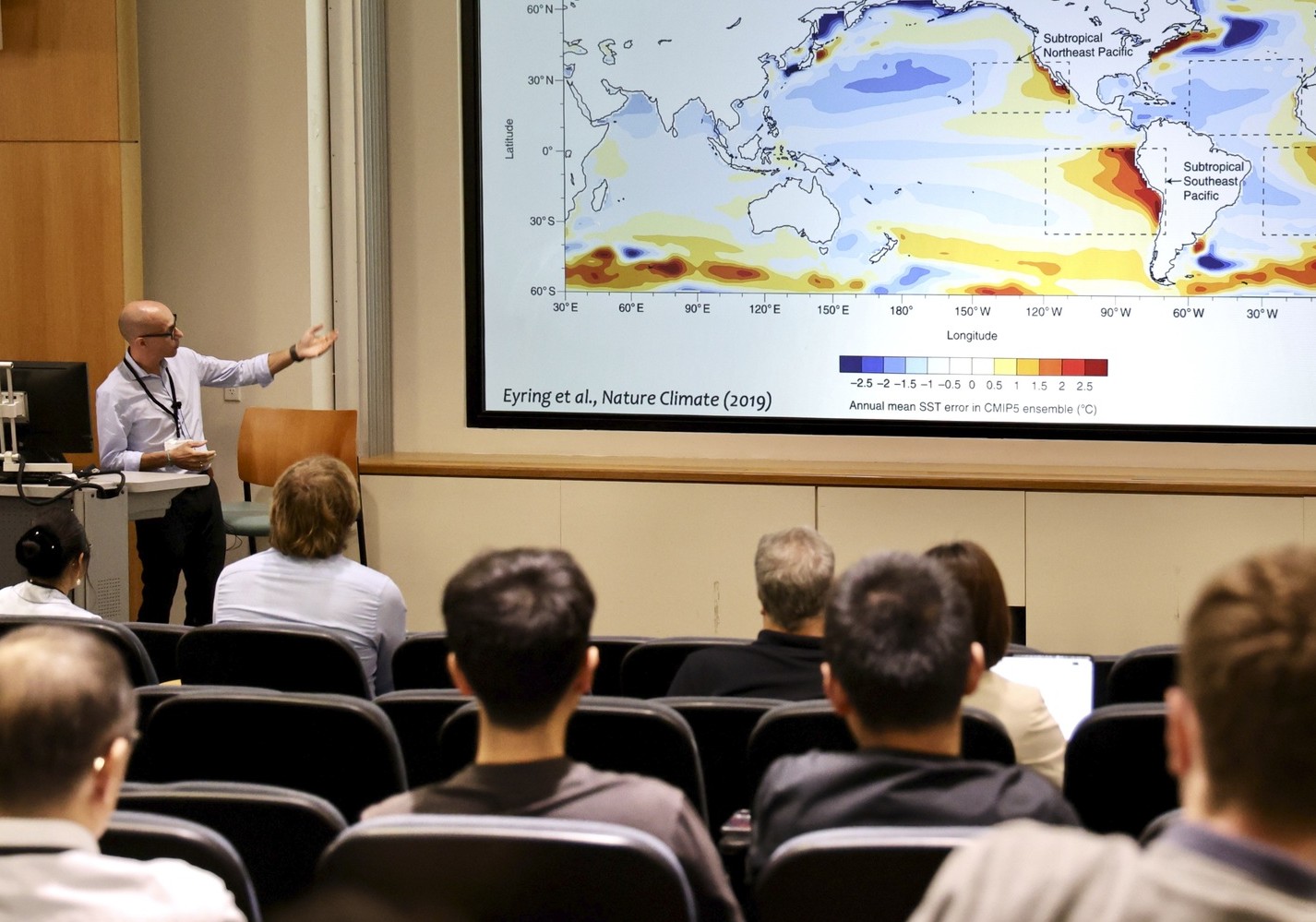
Patrick Heimbach presenting at a technical session

The idea of achieving faster and more efficient results without sacrificing accuracy was evident during Heimbach’s presentation, “Differentiable Programming in Support of Earth System Digital Twins,” delivered on the second day of the conference. Heimbach described how his group’s differentiable model of ocean and ice meets the four key goals for digital twins in Earth system modeling: (1) building accurate, physics-based simulations; (2) continuously updating models with messy real-world data through data assimilation; (3) rigorously quantifying uncertainty; and (4) developing reduced-order models for rapid scenario testing.

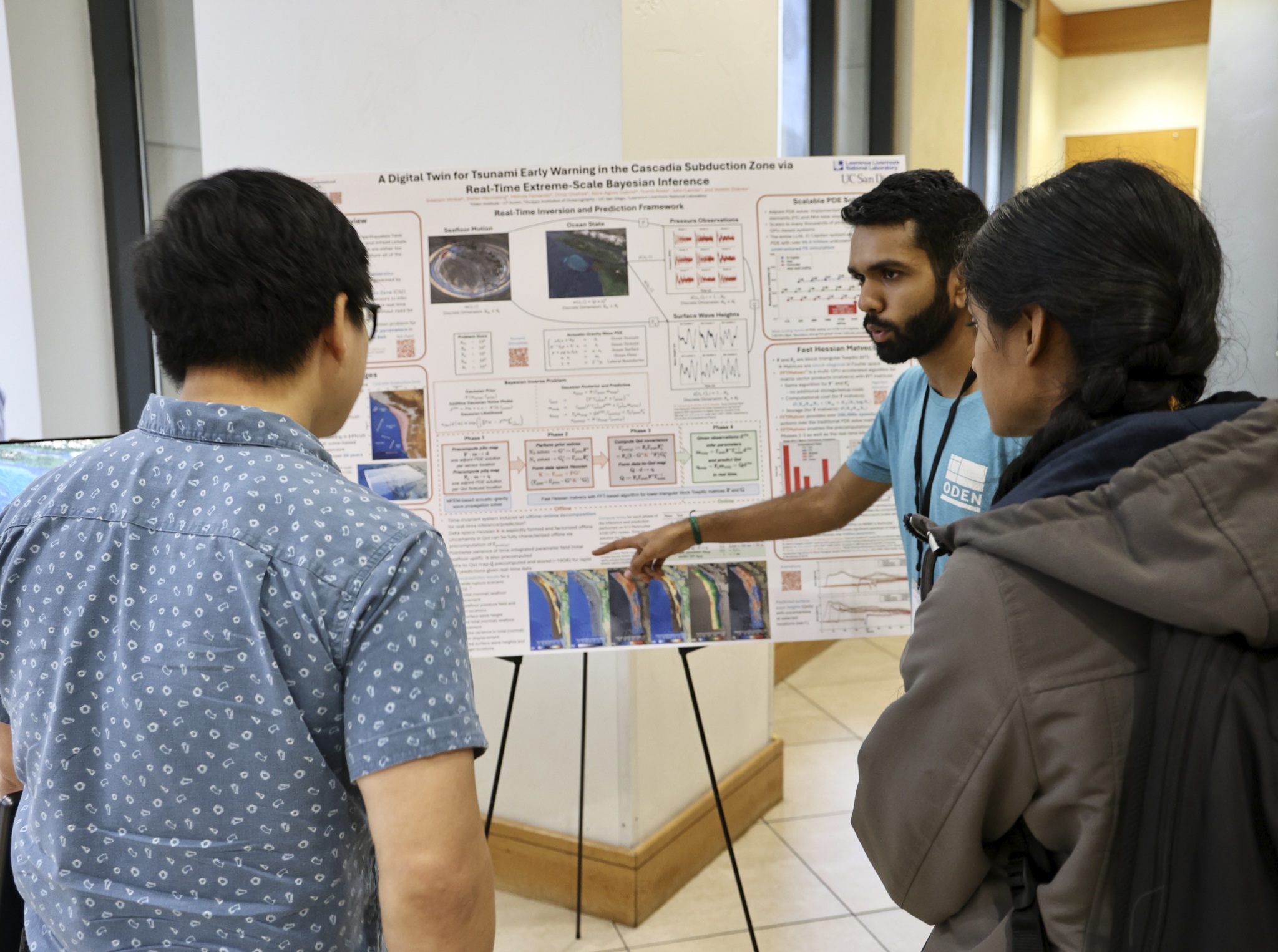
These principles were echoed in the research of Oden Institute graduate student Sreeram Venkat, who works with principal faculty member Omar Ghattas at the Oden Institute and presented at one of the two poster sessions. “The general idea is we want to do tsunami early warning in real time, but also respect the full physics,” he explains. “We want to use data from seafloor sensors to predict where a tsunami will hit — and do it fast,” he emphasized. To achieve this, he developed an offline-online decomposition algorithm, where the heavy computational lifting is done ahead of time. Once an earthquake occurs, the digital twin can quickly ingest sensor data and then swiftly predict wave heights, giving coastal communities critical time to evacuate.

block.caption

Sreeram Venkat presenting his research poster.

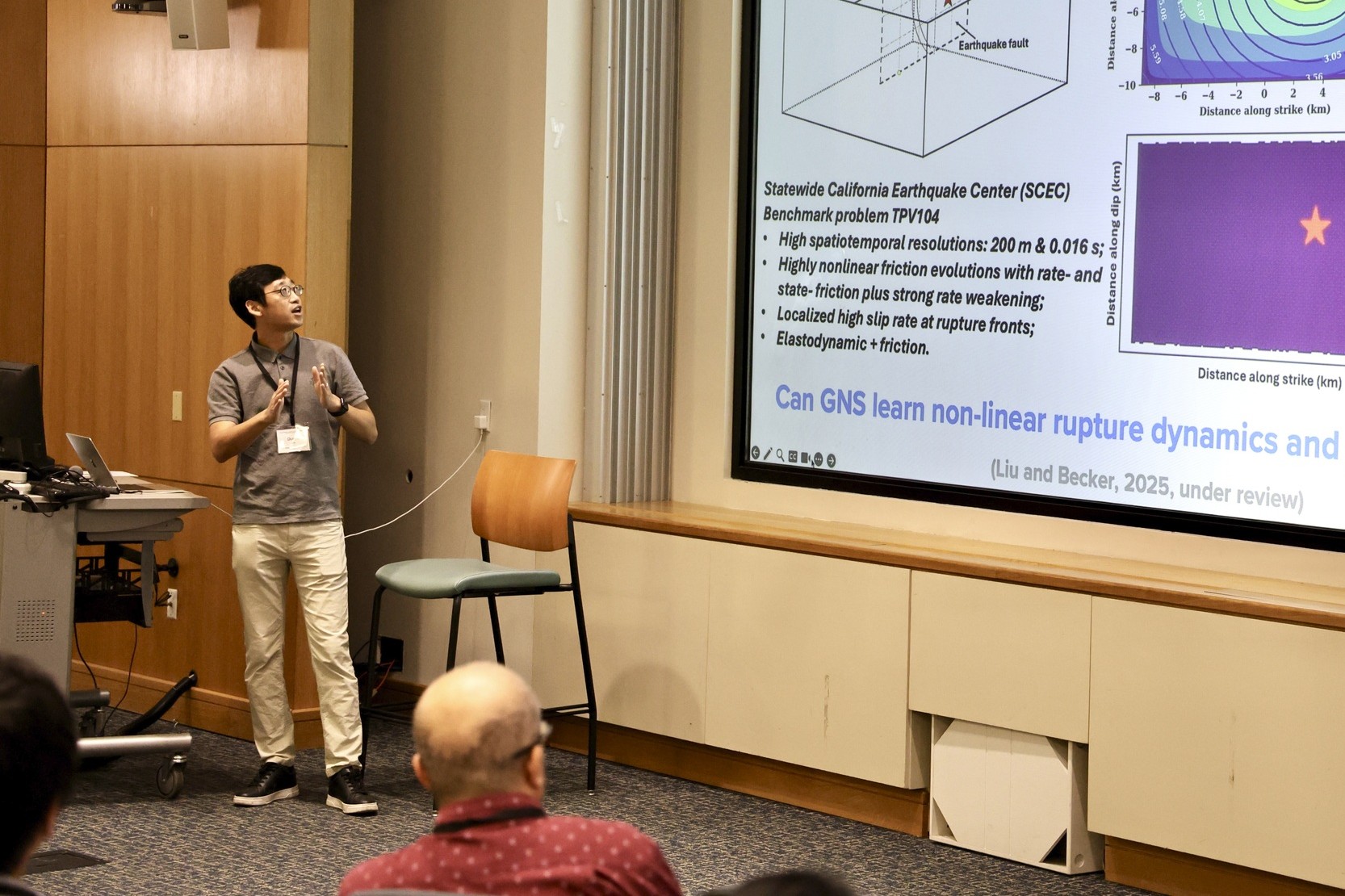
Among the 40 technical sessions, UT computational geoscientist Dunyu Liu gave a presentation on earthquake rupture dynamics, where he discussed implementing graph neural networks to simulate earthquake behavior that uses fewer computational resources. Liu conducts his research with the UT Institute for Geophysics (UTIG) and works with Oden-affiliated faculty member Thorsten Becker, professor of Earth and Planetary Sciences.

block.caption

Dunyu Liu presenting at the conference.

Whether it's predicting tsunamis in real time, simulating earthquakes, or modeling ocean and ice systems, the AIDT4ES Workshop offered a stimulating environment for computational researchers to come together.

The lead organizer of the workshop was Irina Tezaur of Sandia National Laboratories, chair of the USACM EE&S Technical Thrust Area. The workshop was supported by the staff of the Oden Institute and the USACM.