University of Texas at Austin

Profile

Finding the Space Between Medicine and Math - Profile Tarini Thiagarajan

Published Aug. 12, 2026

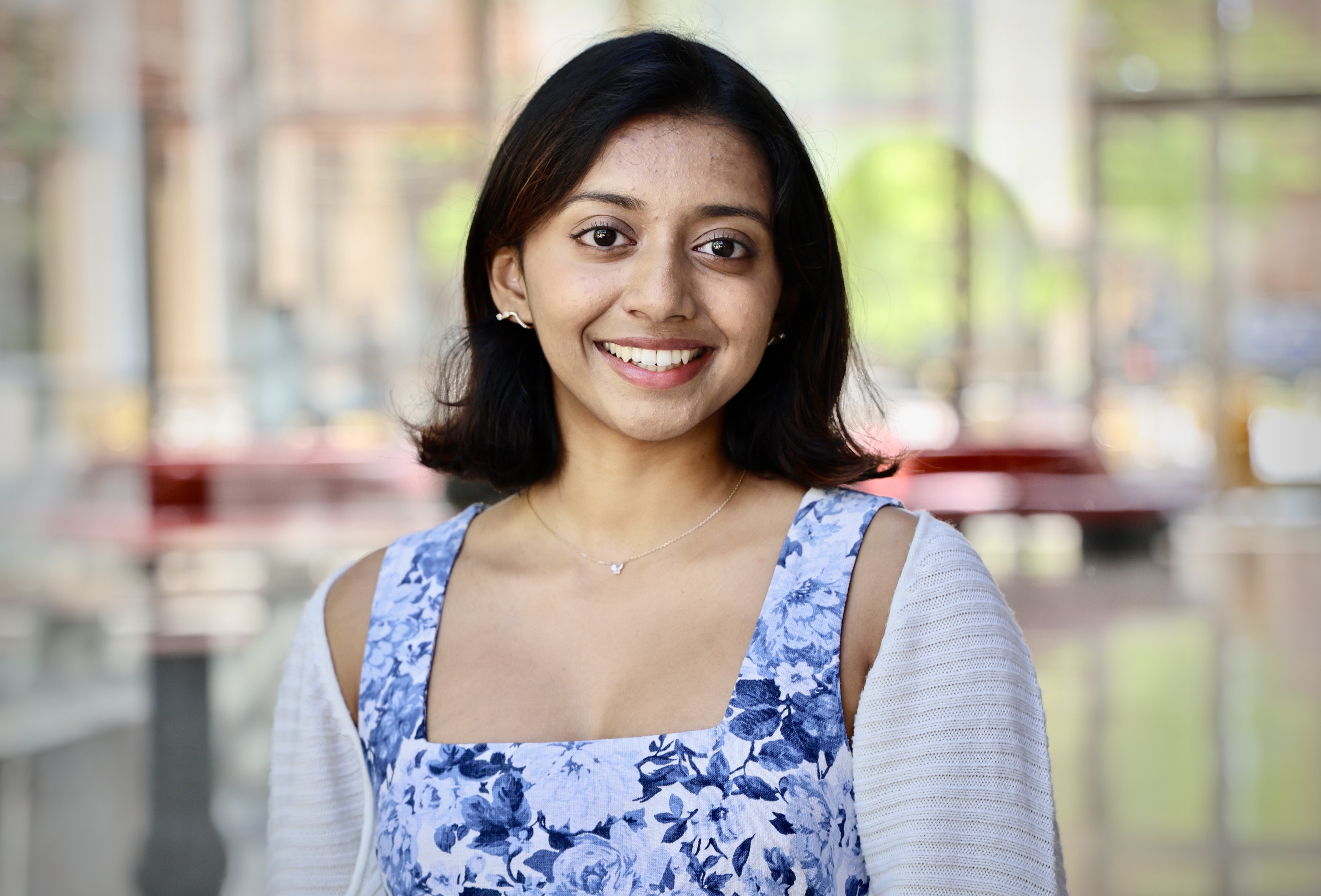
Tarini Thiagarajan. Credit: Joanne Foote/Oden Institute

Tarini Thiagarajan wanted to help people through medicine from a young age. What she didn't know was what that would actually look like. A high school health science course for pre-med students gave her the first hint that the traditional path of becoming a medical doctor, and specifically the oncologist she had always dreamed of being, might not be hers. "It was not what I had expected," she said. "I quickly realized I wasn't as excited by the traditional pre-med path as much as I thought I would be."

Her father nudged her toward engineering, pointing to the advanced math and physics courses she had consistently thrived in. She took his advice and enrolled at the University of Texas at Austin. Her interest in cancer had already been sparked by the time she arrived. 

In 2018, Dr. James P. Allison and Dr. Tasuku Honjo received the Nobel Prize for their work in immune checkpoint therapy, a treatment approach that enlists the body's own immune system to fight cancer. The news caught her attention and drew her toward cancer research. "Immunotherapy fascinated me," she said. "I really wanted to learn more about it and maybe do work similar to Dr. Allison." 

While applying for college, she discovered research by Professor Tom Yankeelov, director of the Center for Computational Oncology at the Oden Institute for Computational Engineering and Sciences, and something clicked. Here was someone using mathematics to understand how cancer behaves in the human body and in a light-bulb moment, Tarini realized she didn’t have to choose between the two things she loved. During her sophomore year in college, Yankeelov and Oden Institute research scientist David Hormuth took a chance on her. "The rest is history," she said. She laughs now about how things turned out. "I guess I decided to become a different kind of doctor than I had initially expected."
block.caption

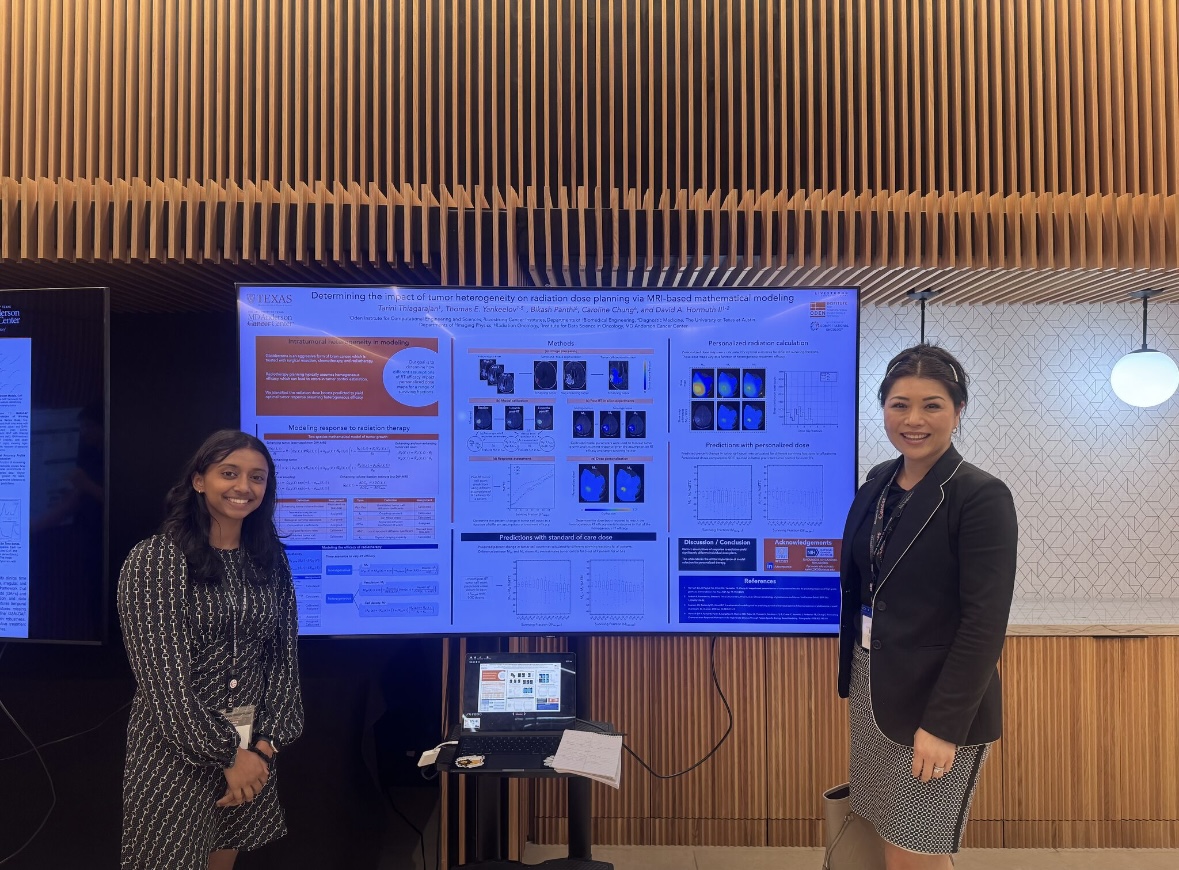
Tarini (L) with Carol Chung (R).

Today, Tarini is entering her fourth year in the Computational, Science, Engineering and Mathematics (CSEM) Ph.D. program where she is also a graduate research assistant in the Center for Computational Oncology. She is also the inaugural recipient of the Pandey Graduate Fellowship, funded by a leadership gift from Dheeraj and Swapna Pandey. The fellowship provides a one year stipend, including tuition and insurance, and is open to students pursuing computational oncology or affiliated research at the Oden Institute.

It hasn't always been smooth sailing though. Tarini, who earned her undergraduate degree in three years, walked straight into the Ph.D. program without a break. About two months in, the weight of it caught up with her. "I realized I was completely burnt out, and started second guessing myself. Did I still want to pursue a Ph.D.?" She made the difficult decision to take a year off, regroup, and return the following fall.

Looking back, she doesn't frame it as a setback. "The gap year wasn't technically part of my plan, but I believe it was part of God's plan," she said. A phrase she heard from a pastor stayed with her through that time: "You are a human being, not a human doing,” a phrase she carried with her upon returning to the program, picking up where she left off on glioblastoma cancer research.

Glioblastoma is one of the most aggressive forms of brain cancer. Even with intensive treatment, patients face a median survival of about fifteen months. Part of the difficulty is that standard radiation therapy follows a general protocol, one crafted to work across large populations rather than tailored to the specific biology of an individual patient's tumor.

Tarini's research addresses that gap directly. She builds mathematical models that use imaging data collected at the start of treatment to predict how a patient's tumor will grow and respond to radiation over time. The models are grounded in partial differential equations, mathematical tools that describe how something changes across both space and time, and they are fed with real patient MRI data to make the predictions as individualized as possible.

block.caption

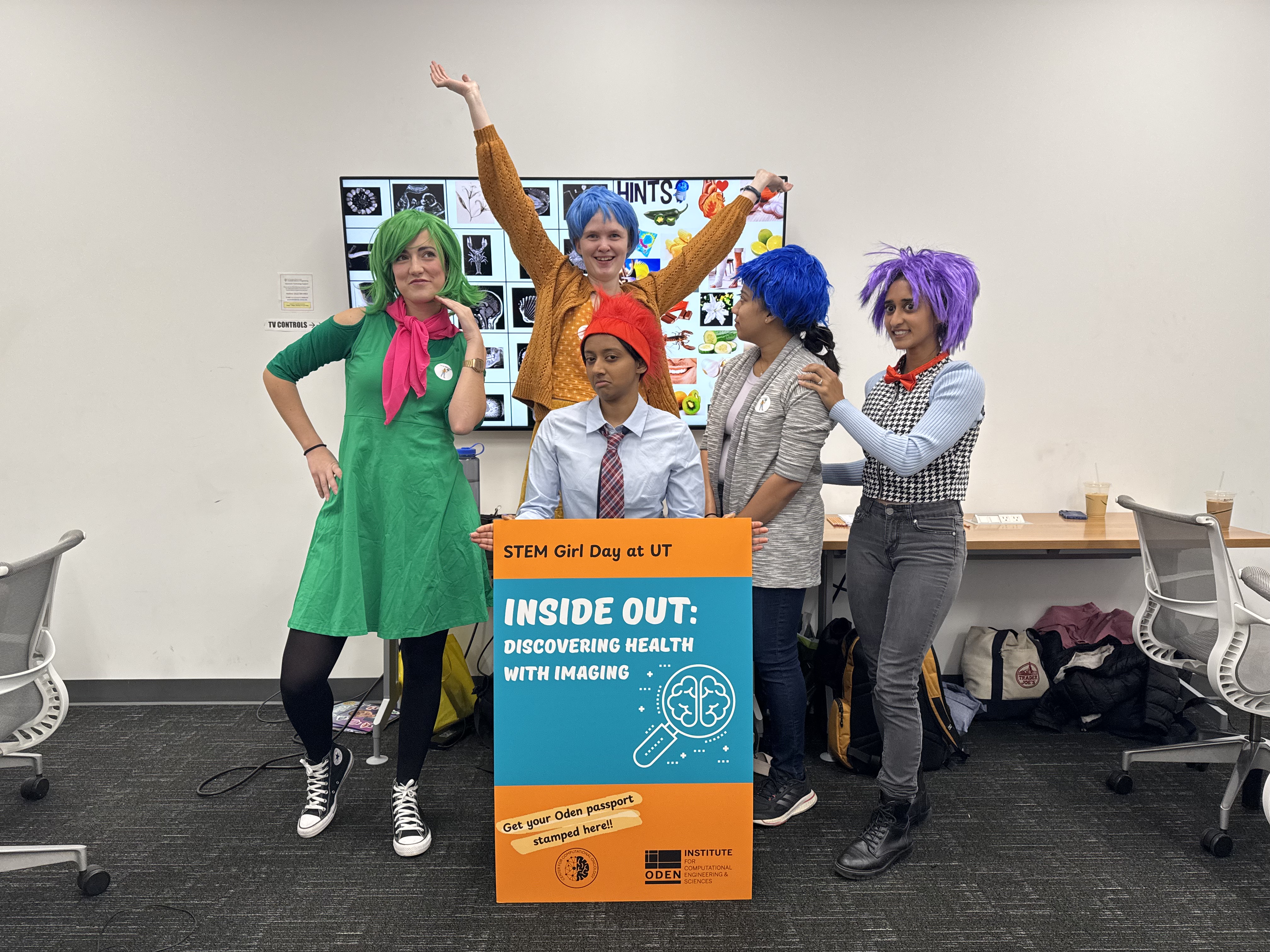
UT STEM Girl Day. Credit: Oden Institute

Her current focus is developing a framework that computes the ideal distribution of radiation doses across a standard thirty-session treatment plan, weighing tumor control against protecting healthy brain tissue. She is also thinking carefully about whether the output is something clinicians can actually use. "Meaningful progress means building a model that clinicians trust and can realistically use to improve patient care," she said.

She credits the interdisciplinary environment at the Center for Computational Oncology with keeping that clinical perspective front and center. The Center brings together mathematicians, engineers, and clinicians, and Tarini says the conversations across those groups are essential. A collaboration with Dr. Caroline Chung's lab at MD Anderson Cancer Center extends that reach further.

Hormuth, who has worked with Tarini for six years, has watched her grow from an undergraduate researcher into a Ph.D. student tackling one of the field's most technically demanding problems. "Over the past six years, I've had the pleasure of watching Tarini grow into a truly exceptional cross-disciplinary researcher," he said. "The framework she is developing to spatially personalize radiation doses for glioblastoma is incredibly complex, requiring both advanced computational modeling and a deep understanding of clinical workflows, and it's a project that would defeat many others in its path. Her meticulous attention to detail, multi-colored lab notes, and eagerness to learn subjects well outside the CSEM curriculum have made her an absolute joy to collaborate with, both here and with our partners at MD Anderson Cancer Center."

Outside the lab, Tarini writes, composes, and produces music. She sees the two pursuits as expressions of the same underlying impulse. "Music and research are both ways I understand and process the world," she said. "They are both about sharing our perspectives and learning from one another." She also plays basketball, attends New Life Austin, and leans heavily on family, friends, and lab members on the days when progress feels out of reach. "Their confidence in me often helped me keep going when I doubted myself," she said.

Her advice to students curious about computational medicine is simple. Find a lab that interests you. Send the email. If you don't hear back, follow-up. "They were in your shoes at one point, and most people are genuinely happy to help," she said.

block.caption

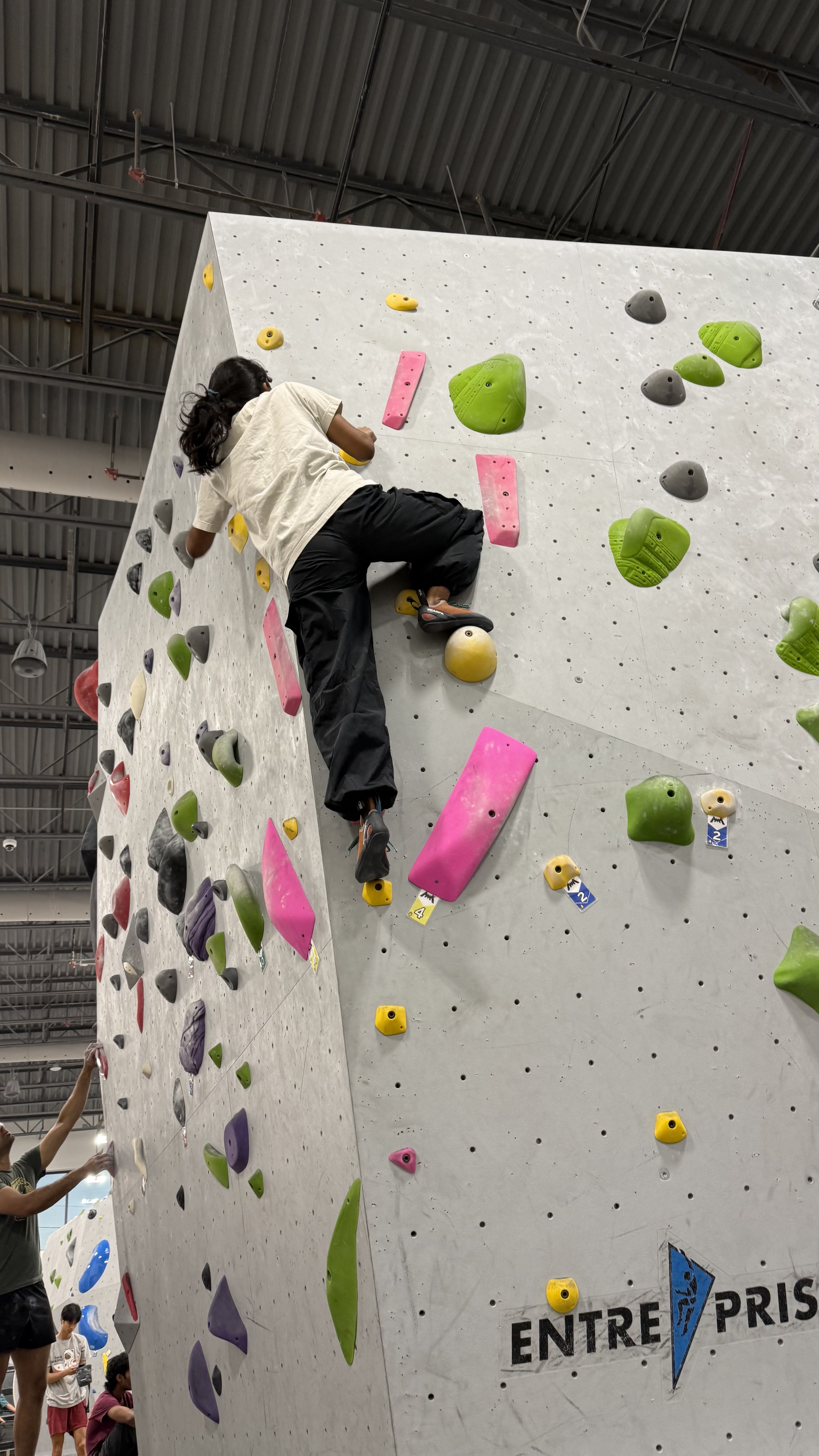
Tarini rock climbing.