University of Texas at Austin

News

New Faculty Nick Nelsen Joins UT Austin to Advance Trustworthy AI Research

Published Aug. 17, 2026

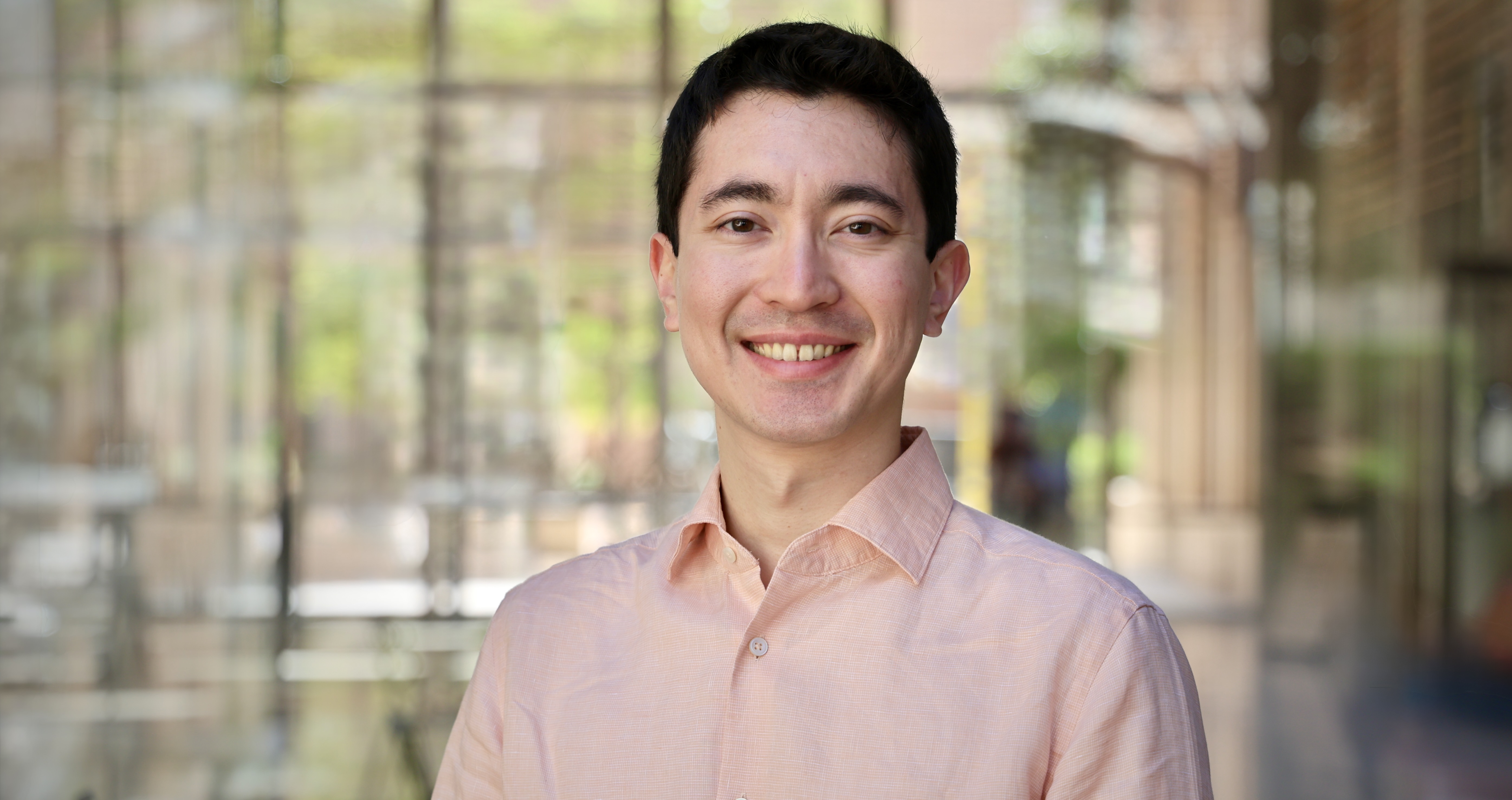
Nick Nelsen. Credit: Joanne Foote/Oden Institute.

The Oden Institute for Computational Engineering and Sciences at The University of Texas at Austin is excited to announce the appointment of Nicholas Nelsen as an assistant professor beginning Fall 2026. He will hold a joint appointment at the Oden Institute as a principal faculty member and the Department of Aerospace Engineering and Engineering Mechanics. Before joining UT, Nelsen was a Klarman Fellow in the Department of Mathematics at Cornell University and a National Science Foundation postdoctoral fellow at the Massachusetts Institute of Technology.  

Using machine learning methods, Nelsen’s research aims to make artificial intelligence (AI) a more trustworthy and predictable tool in fields such as weather forecasting, fusion energy, and medical imaging.

"Nicholas Nelsen’s appointment highlights the strength of collaboration between the Oden Institute and the Department of Aerospace Engineering and Engineering Mechanics. His research exemplifies the kind of interdisciplinary innovation that drives breakthroughs in modern engineering — combining mathematical foundations, computational tools and real-world applications to address some of society’s most complex challenges. We are excited to welcome him to UT Austin and support the growth of his research program,” stated Clint Dawson, department chair and professor in aerospace engineering and engineering mechanics.

1. What drew you to this area of research?

What enticed me to this field was the possibility of bridging deep mathematical, computational, and statistical foundations with impactful application areas such as weather, medical imaging, and materials. As an undergraduate at Oklahoma State University, I was drawn to computational science where I learned numerical analysis — combining computing and applied mathematics to simulate and engineer the natural world. During this time, a summer internship at Sandia National Laboratories was especially formative. There I worked on numerical methods for shallow water flows in the atmosphere, and saw how mathematics, algorithms, and computation can come together to solve large-scale problems. 

After earning my undergraduate degree, I pursued and earned my Ph.D. from the California Institute of Technology. While there, my research focused on operator learning for the design of structured machine learning methods that remain reliable for high-dimensional physical science and engineering problems. 

2. Tell us about your research and why it's impactful.

I develop new forms of theoretically grounded AI for scientific and statistical computing. Regardless of the specific application domain, the unifying thread is that I make computer models faster, more accurate, and more trustworthy when they are used to understand complicated physical systems. My past work has improved medical imaging, made AI predictions more reliable, and helped scientists choose fewer but more informative experiments to perform. At UT, I am looking forward to new challenges ranging from probabilistic data-driven weather forecasting to the design of fusion energy devices.

3. What are some potential real-world applications of your work?

I am motivated by problems where better computation can lead to better decision-making. Currently, I am interested in three main real-world applications: weather forecasting, fusion energy, and intelligent systems. The potential societal benefits from fundamental and applied work on these problems include rapid hurricane tracking for disaster preparedness, designing sustainable energy technologies, and building AI-enhanced autonomous systems that people can trust in safety-critical settings.

4. What makes your research unique?

My work is naturally interdisciplinary because the same mathematical ideas often appear in very different scientific domains. By working abstractly and taking a theoretical perspective, I can strip the problem to its essentials, which more easily enables cross-discipline transfer of ideas and methods. AI is revolutionizing my field, upending long-held assumptions in computer science, statistics, and computational mathematics. What excites me is the opportunity to help explain why AI methods work, when they fail, and how to make them reliable enough for science and engineering tasks. 

Solving hard research problems such as these can feel euphoric because the answer may resist us for months or years before everything finally clicks. It is also personally fulfilling to share these best moments with collaborators, students, and colleagues who helped make the breakthrough possible.

5. What drew you to the Oden Institute?

For someone like me with an interdisciplinary background, it can be hard to find a true academic home. The Oden Institute felt like that home almost immediately. When I first visited UT as a graduate student for the inaugural Scientific Machine Learning Workshop three years ago, I witnessed a rare combination of mathematical depth, engineering ambition, and computational culture that inspired me. Future visits to UT reinforced these impressions. 

Due to its size, the university also offers a plethora of opportunities for research, teaching, and mentoring that are hard to find elsewhere. Research and collaboration go hand-in-hand — even a short conversation during a coffee break can spark a flash of insight that completely changes how I see a problem. This is one of the great joys of an academic career.

I am thrilled to build a research team and work with faculty and students. As AI alters the higher education landscape, I want to support students on their journey to become independent researchers. By cultivating transferable skills, from identifying important research questions to developing and implementing the right tools to solve them, students will be prepared to tackle both today’s and tomorrow’s challenges.