University of Texas at Austin

Profile

Ufuk Topcu on the Future of Trustworthy Autonomy

Published April 14, 2026

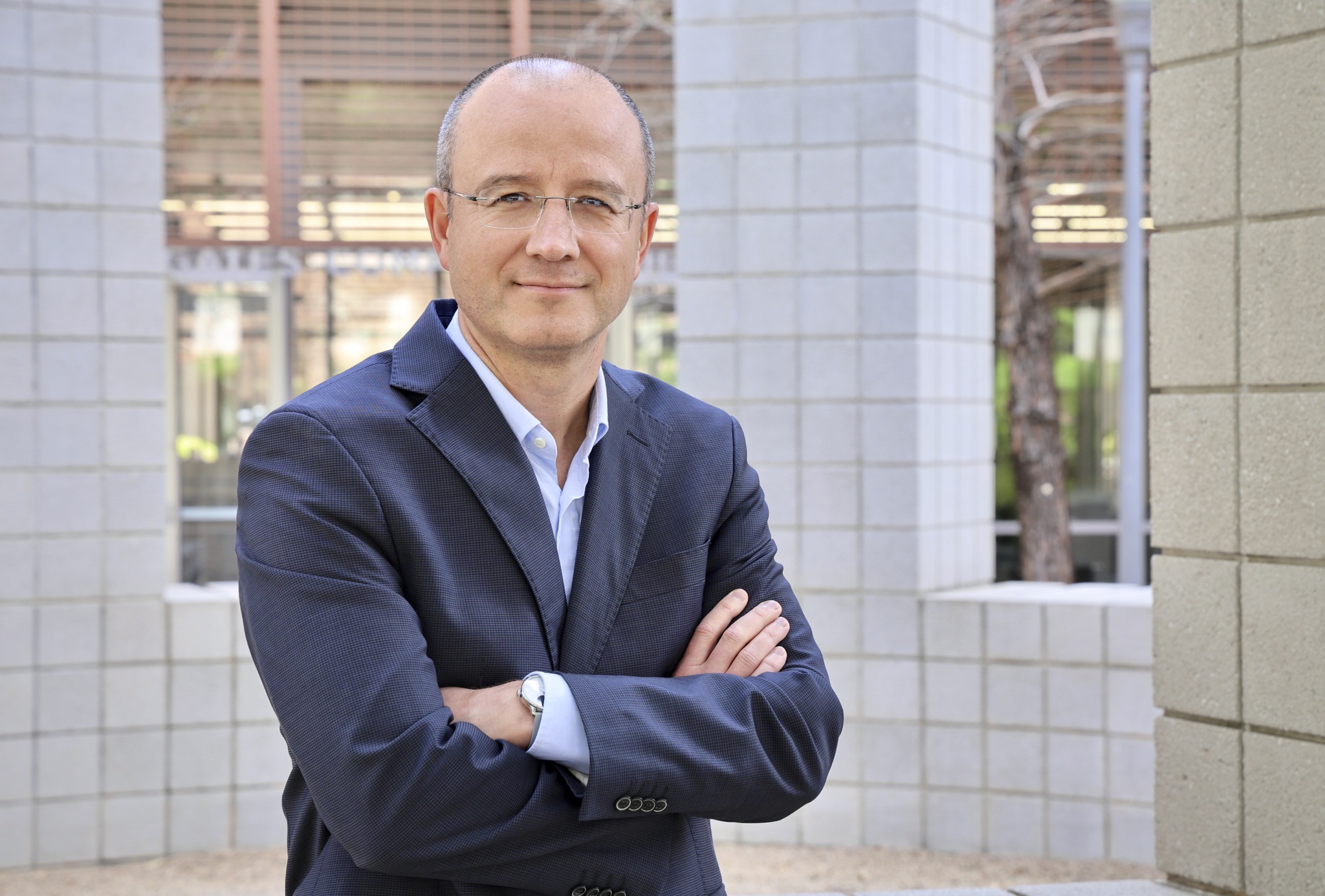
Ufuk Topcu. Credit: Joanne Foote/Oden Institute

Self-driving vehicles navigating busy streets, robotic systems assisting in disaster response, and autonomous machines exploring environments too dangerous for humans—such as entering a collapsed building after an earthquake—are no longer ideas of the distant future. Autonomous systems take on increasingly critical roles in transportation, defense, scientific discovery, and large-scale engineering. The Center for Autonomy at the Oden Institute for Computational Engineering and Sciences at the University of Texas at Austin is positioning the university as a leader in developing the scientific foundations that make these systems reliable, adaptive, and aligned with human expectations.

Even though it feels ubiquitous, with self-driving cars on every corner in test cities, autonomy is still in its early stages. The Center for Autonomy, led by Ufuk Topcu, a core faculty member of the Oden Institute and a professor of aerospace engineering and engineering mechanics, is entering a new era of growth and national leadership and expanding its research footprint while strengthening national collaborations. In 2025, Topcu celebrated his tenth year at UT Austin, marking a decade of building autonomy research and community on campus, a milestone he attributes in part to the Oden Institute’s supportive environment.

Topcu said that the Oden Institute’s culture is foundational for his work. “The Institute encourages crossing disciplinary boundaries, and it values the synthesis of ideas as much as depth within a single field. This environment enables exactly the kind of integration autonomy requires.”

“Autonomy is not just about machines operating without humans,” Topcu said. “It is about elevating the level of abstraction at which humans and machines interact. That shift requires advances in control theory, learning, verification, game theory, and human interaction, and it requires bringing those ideas together in a coordinated way.”
block.caption

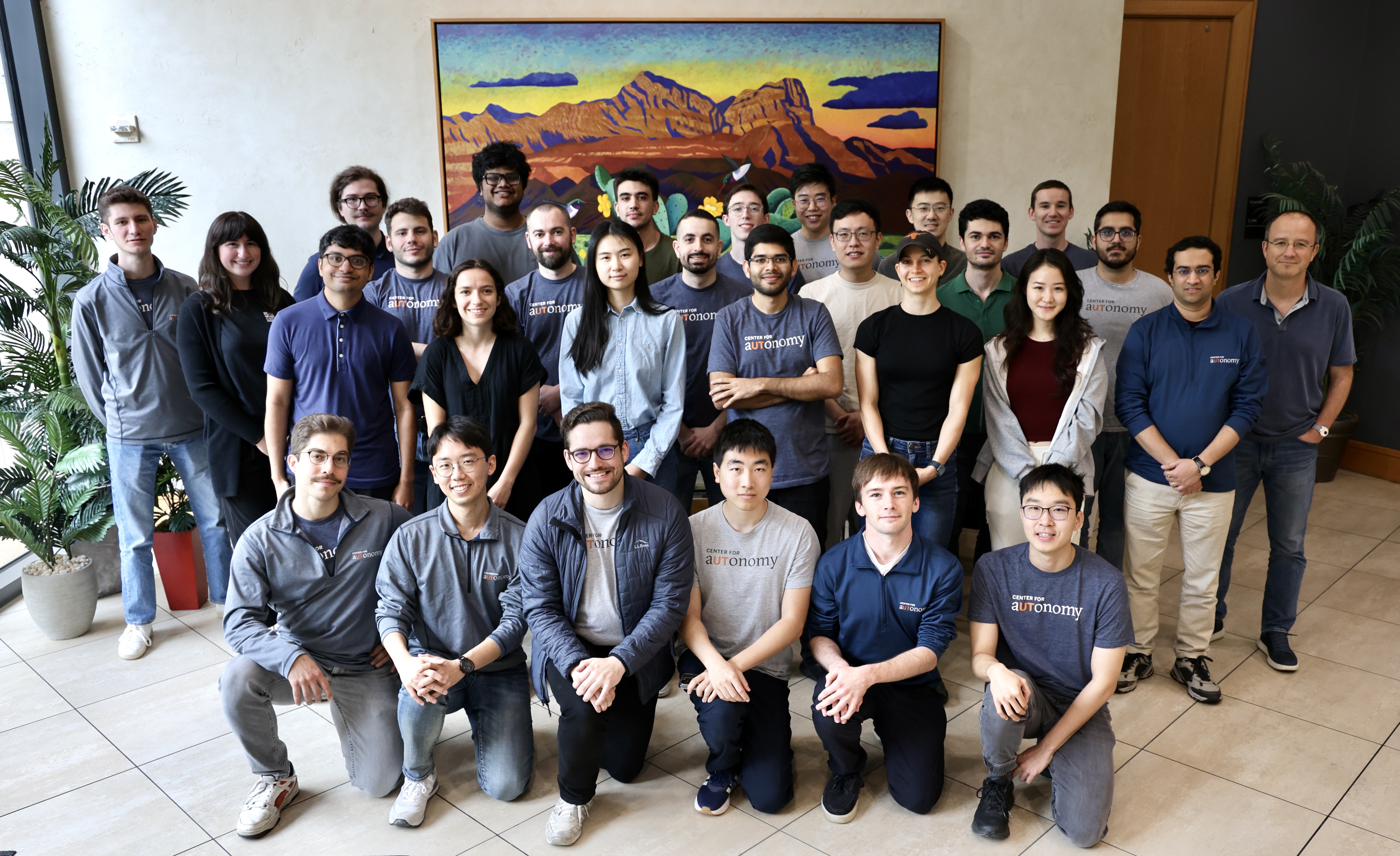
Members of Topcu's research group, l-r: : Michal P. Podolinsky, Shenghui Chen, Jaehan Im, Ruihan Zhao, Neel Bhatt, Yunhao Yang, Ufuk Topcu, Alexander Nettekoven. Credit: Joanne Foote/Oden Institute

From Abstraction to Application 

Topcu’s own path to autonomy research began during his undergraduate studies. “I was drawn early on to the abstract beauty of control theory, the elegance of mathematical structure, stability analysis and feedback, and to the idea that complex dynamic behavior could be shaped through principled design,” he said. That interest stayed with him throughout his doctoral work, but it was the emergence of autonomous aerial systems—such as drones—that provided a compelling arena where those abstract ideas could confront real-world challenges.

“Aerial autonomy offered a rich set of real, high-consequence problems that could be tested against the real world. These systems became an experimental playground,” added Topcu. He added that as the capabilities of autonomous systems increase, they simultaneously generate new questions. This is why the work of the Center for Autonomy is so vital: to answer the evolving questions that arise with new breakthroughs.

The interdisciplinary environment is where the Center thrives, bringing together faculty with diverse and complementary expertise. The breadth and depth of this team reflect the central challenge of autonomy: developing and refining autonomous systems so that they function in unpredictable situations. These systems must evolve in changing environments while behaving in ways that humans can trust, interpret, and supervise. 

“The Center’s composition is very intentional,” said Topcu. “The pressing problems in autonomy do not fit neatly in a box. Our goal is to create a unified program that advances capability and trustworthiness while remaining responsive to real-world demands.”

block.caption

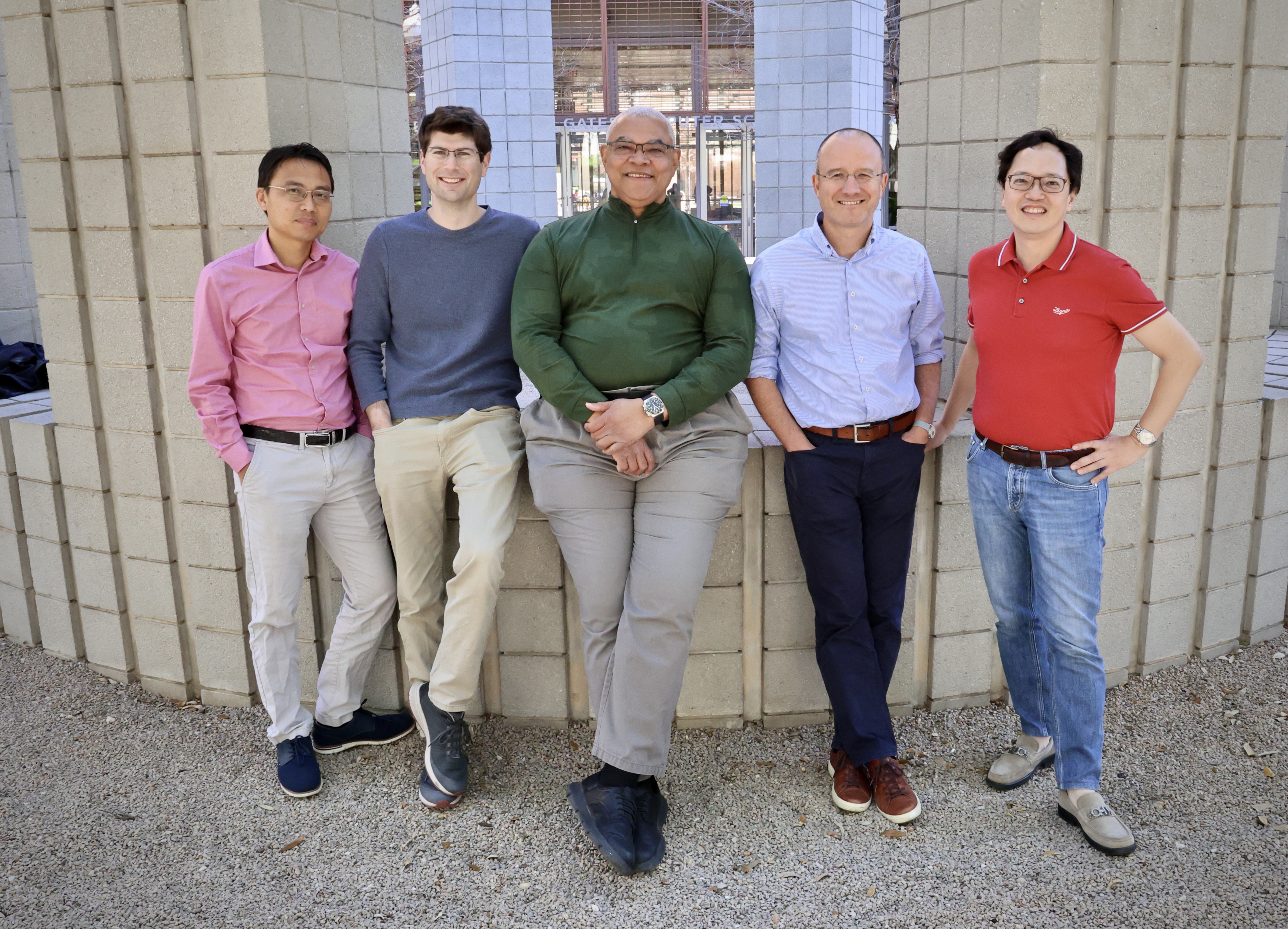
From l-r: Thinh Doan, David Fridovich-Keil, J-P Clarke, Ufuk Topcu, Richard Tsai. Not pictured: Krishna Kumar, Renato Zanetti and Atlas Wang. Credit: Joanne Foote/Oden Institute

The Center for Autonomy

Eight core groups make up the Center’s research community, each contributing to its interdisciplinary approach:

Together, these groups reflect the Center’s commitment to depth within disciplines while fostering cross-cutting collaboration among autonomy, control, learning, perception, and decision-making. 

“Autonomous systems support critical infrastructure, scientific discovery, and national security,” Topcu said. Critical infrastructure includes electric power grids, transportation networks, communication systems, and water and energy distribution systems whose failure would have serious societal, economic, or safety consequences. 

Take the self-driving car: as it approaches a busy intersection, it must account for unpredictable pedestrians, changing road conditions, and incomplete sensor information, while behaving as if a human were at the wheel, in order for the  passenger to feel comfortable. Reliability and trustworthiness are paramount.

This vision is reflected in the Center’s research through the depth and diversity of its faculty expertise, spanning control, optimization, learning, and computation across a wide range of domains. This includes aircraft trajectory optimization and air traffic systems, dynamic games and safety in multi-agent interactions, real-time decision-making for teams of autonomous systems, high-performance computing and physics-informed machine learning, scientific computing for complex multiscale systems, autonomous space systems, and the theoretical foundations of machine learning and formal methods.

Autonomy is not just about machines operating without humans. It is about elevating the level of abstraction at which humans and machines interact.

— Ufuk Topcu

Community Outreach and Education

The Center for Autonomy leads a growing number of outreach and public engagement programs. From Tween Code Clubs at the Austin Public Library to campus-wide STEM events, researchers design original programs that provide the community with direct entry points into the engineering process. This approach ensures the next generation is equipped with tangible experiences to actively interact with new technology, shaping their world.

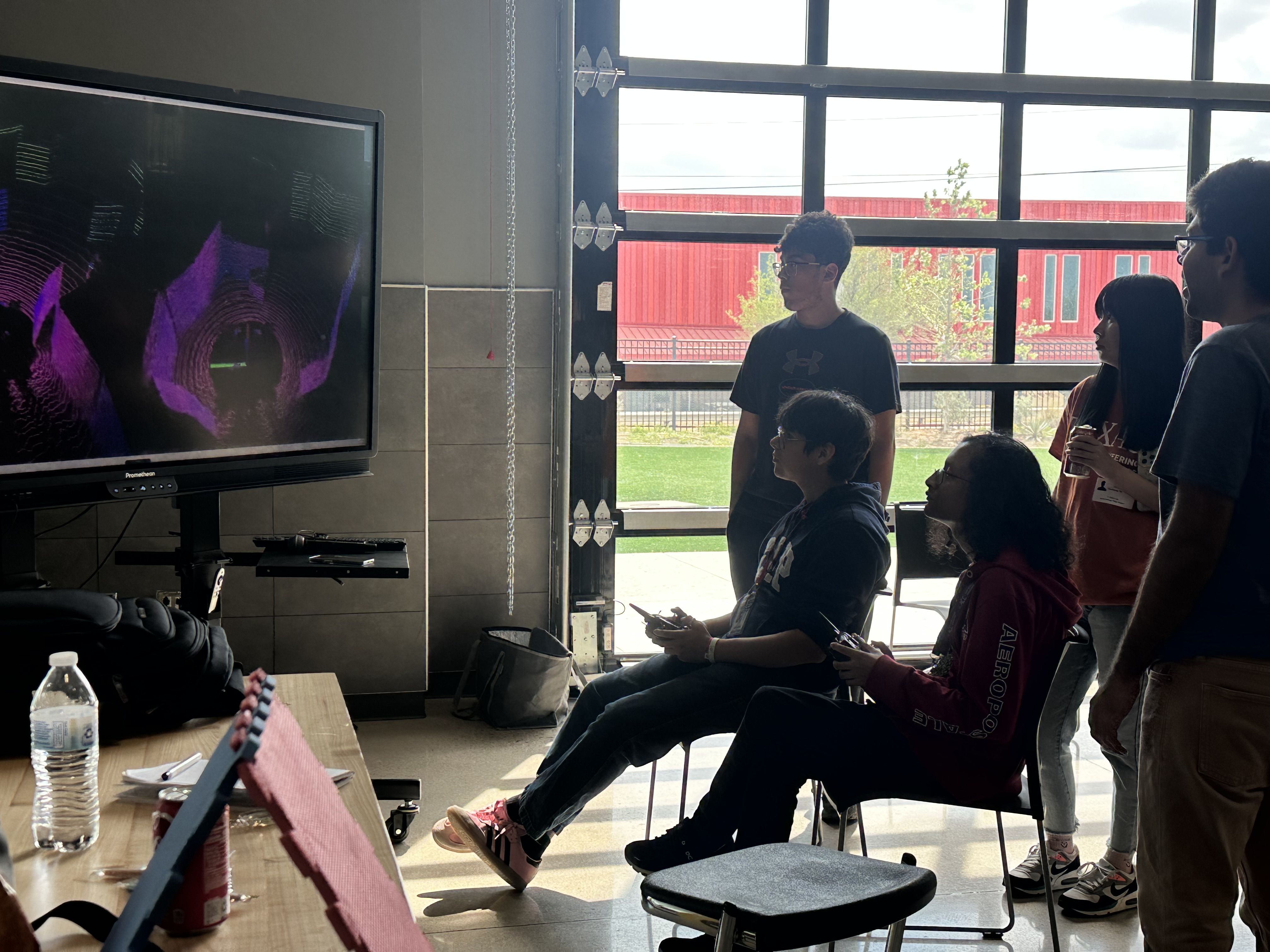
This model of active engagement is exemplified by the partnership between Topcu’s Autonomous Research Group and the Del Valle Independent School District. Under the direction of the members of the Center, spearheaded by postdoctoral fellows Adam Thorpe and Christian Ellis, and Ph.D. student Cevahir Koprulu, high school interns follow a curriculum designed to mirror a professional engineering workflow. “Student interns build an autonomous RC car platform from the ground up,” said Thorpe. “They learn practical engineering skills such as soldering, 3D design, electronics prototyping, and motor control programming while integrating each component into a working autonomous system.”

block.caption

Working with students at Del Valle High School. Photo: Meredith Albers/Oden Institute

Latest Research

Most recently, Topcu is leading a Department of War MURI project involving partners at Tufts University, Columbia University, Stanford University, the University of Virginia, and Iowa State University. The project focuses on dynamic certification, a new approach to ensuring the trustworthiness of adaptive autonomous systems.

Traditional certification approaches safety and correctness as fixed properties that are verified only at the start of a system’s life. According to Topcu, this approach fails for newer systems that learn, adapt, update, and encounter new situations throughout their lifetime.

“Dynamic certification is a continual process that evolves with the system and its environment,” he said. “The central question becomes: What do we currently know about this system’s behavior, under what conditions, and with what confidence? This perspective allows autonomous systems to adapt while maintaining accountability.”

“Safety is not a fixed checklist,” he said. “It must adapt to context, experience, and human needs. This is why dynamic certification resonates with our work. It provides a principled way to ensure accountability as systems learn and change.”

Autonomy requires contributions from many disciplines and many voices. Diversity of perspectives is essential to building systems that remain accountable and beneficial.

— Ufuk Topcu

Looking Ahead

Topcu believes that future leaders in autonomy will be those who combine technical depth with intellectual flexibility and who understand the societal impact of their work. “Autonomy requires contributions from many disciplines and many voices,” he said. “Diversity of perspectives is essential to building systems that remain accountable and beneficial.”

The coming years will be a pivotal period.“The presence of autonomous vehicles, drones, and robots is the beginning of a long transformation,” he said. “Our responsibility is to build the principles and methods that will make these systems safe, dependable, trustworthy, and aligned with human expectations. The next decade of autonomous systems will be defined not by whether these technologies exist, but by how reliably and ethically responsible they operate.”

With new national leadership roles, expanded interdisciplinary research, a strong outreach pipeline, and a growing network of collaborators, the Center for Autonomy is shaping that future and strengthening UT’s role as a global hub for responsible and trustworthy autonomy.