Past Event: Oden Institute Seminar
Developing novel computational biophysics tools to study and engineer biomolecular complexes and biological materials
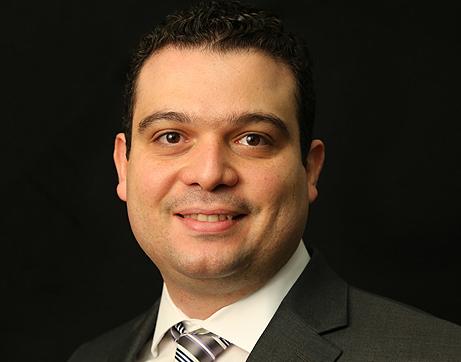
Phanourios Tamamis, Assistant Professor, Artie McFerrin Department of Chemical Engineering, Texas A&M University
3:30 – 5PM
Monday Jan 25, 2021
Zoom Meeting
Abstract
CLSB Series, co-hosted by Ron Elber (Oden Institute) and Lydia Contreras (Chemical Engineering dept).
Computational biophysics tools are increasingly becoming powerful tools to study and engineer biomolecular complexes and biological materials. My group focuses on the development of novel computational biophysics tools, combining molecular dynamics simulations, free energy calculations and additional primarily in-house structural analysis tools to address key challenging problems of significant biological and health importance. My presentation will present an overview of the tools developed by my lab and emphasize on certain tools addressing challenging questions in studying protein interactions with modified RNAs and ligand compounds, as well as in designing functional peptide-based materials. Particularly, our lab developed the first computational protocol for the study and design of protein interactions with modified RNAs; the talk will highlight example cases of its implementation in collaboration with Contreras’ experimental lab (UT Austin) to elucidate interactions between modified RNAs and important RNA binding proteins. Additionally, our lab developed a novel computational docking refinement protocol to improve accuracy in predicting ligand-protein binding complex structures; the talk will demonstrate its capacity to delineate structural and allosteric differences in protein binding with ligands which are structurally similar but have different functional properties. Finally, I will present our recent progress on using rational and optimization-based approaches developed by my lab to design functional peptide materials with several applications including tissue-engineering, drug delivery and gene transfer. The talk will highlight our latest efforts on using a combination of computational and experimental methods by Gazit’s lab (Tel Aviv University) to design a novel generation of cancer drug nanocarriers with enhanced fluorescence properties, and with the ability to self-encapsulate a particular cancer drug, with in situ monitoring properties.
Biography
Phanourios Tamamis received his B.S. degree in 2006 and Ph.D. degree in 2010 from the Physics Department of the University of Cyprus, and was recognized as the top Cypriot undergraduate researcher in 2006. During his undergraduate, graduate and early-postdoctoral studies, he was supervised by Professor Georgios Archontis. After finishing his Ph.D. studies, from 2010 until 2012, Phanourios Tamamis served as a Postdoctoral Fellow at the University of Cyprus, and as a Fulbright scholar at the University of California at Riverside and Princeton University, under the co-supervision of Professors Dimitrios Morris and Christodoulos A. Floudas. In 2013, he joined the lab of Professor Christodoulos A. Floudas at the Chemical and Biological Engineering Department of Princeton University as a Postdoctoral Research Associate. In 2015, he joined the Chemical Engineering Department of Texas A&M University as an Assistant Professor. Tamamis’ lab addresses key problems at the intersection of computational biophysics, computational biomolecular engineering and self-assembly. He received awards for his teaching and research, including the Kaneka Junior Faculty Award in 2018 for his research in biological polymers. His research is funded by the NIH and NSF.
Event information
Monday Jan 25, 2021