Contact
website https://vagheesh.cns.utexas.edu
Google ScholarView Profile
emailVagheesh@utexas.edu
office NMS 4.122
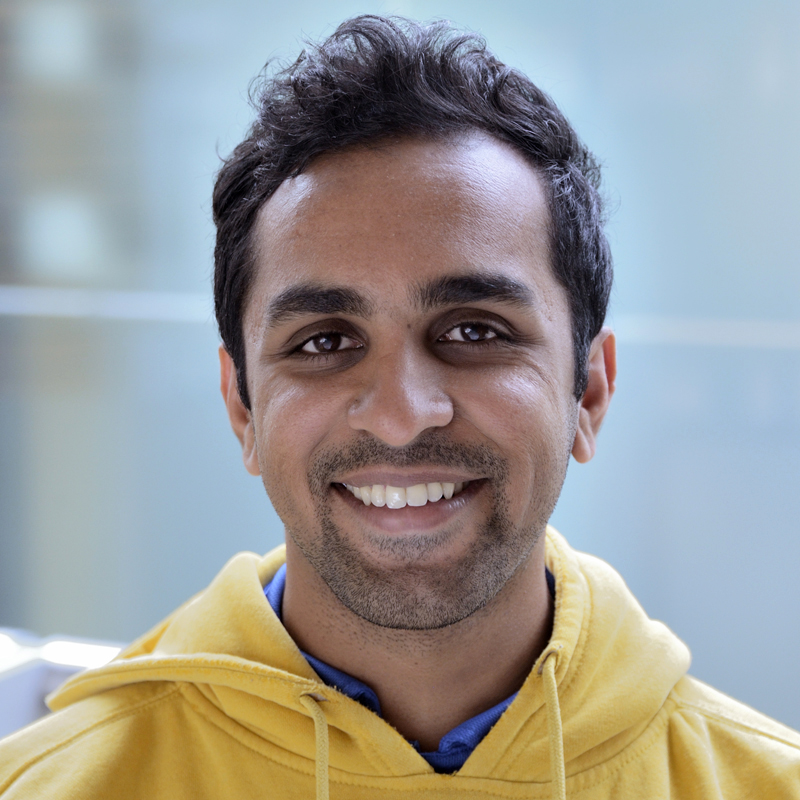
Vagheesh Narasimhan, PhD
Associate Professor Integrative Biology
Biography
Dr. Vagheesh M. Narasimhan is an Assistant Professor (promoted to Associate Professor with Tenure from 2026) of Integrative Biology and Statistics & Data Science at The University of Texas at Austin, and a Core Faculty in the Center for Computational Medicine at the Oden Institute for Computational Engineering and Sciences. After initially training in Electrical Engineering, with a focus on computer vision and information theory, Vagheesh did a Masters in Biostatistics at Harvard University under Curtis Huttenhower. He moved to the University of Cambridge and the Wellcome Trust Sanger Institute to do a PhD in Genetics advised Chris Tyler-Smith and Richard Durbin. He was then a postdoctoral fellow at the Department of Genetics, Harvard Medical School with David Reich and Nick Patterson. The research in his lab has been funded by the National Science Foundation, the National Institute of Health, the Paul Allen Family Foundation, the MD Anderson Cancer Accelerator, Texas Biologics, the Origen Health Research Center at Tec de Monterey, Lyda Hill Philanthropies, Love Tito’s Foundation, and BioMarin Pharmaceuticals. In 2025, he received the UT Austin Provost's Research Excellence Award for the best research paper in a calendar year across all fields at the university.
His research interests: We are an interdisciplinary group at the intersection of genetics, computer science, and statistics, with broad interests in understanding the human genome. A single human zygote contains not only the information required to develop into an adult organism, but also the evolutionary history of our species encoded within its DNA. Our research combines large-scale genomic, imaging, clinical, and ancient DNA datasets with cutting-edge statistical and AI methods to better understand human biology, disease, aging, and evolution. We develop multi-modal AI models that integrate medical imaging, genetics, electronic health records, blood biomarkers, ECGs, and demographic data across hundreds of thousands of individuals to study biological aging, precision phenotyping, disease prediction, and drug target discovery. Our work has identified genetic determinants of lifespan and musculoskeletal disease, informed therapeutic development through collaborations with pharmaceutical and philanthropic partners, and enabled models for forecasting disease risk years in advance. In parallel, we leverage ancient DNA to reconstruct human evolutionary history, migration, admixture, and adaptation, while developing new computational methods to analyze genomic time-series data and uncover the dynamics of human populations across millennia.