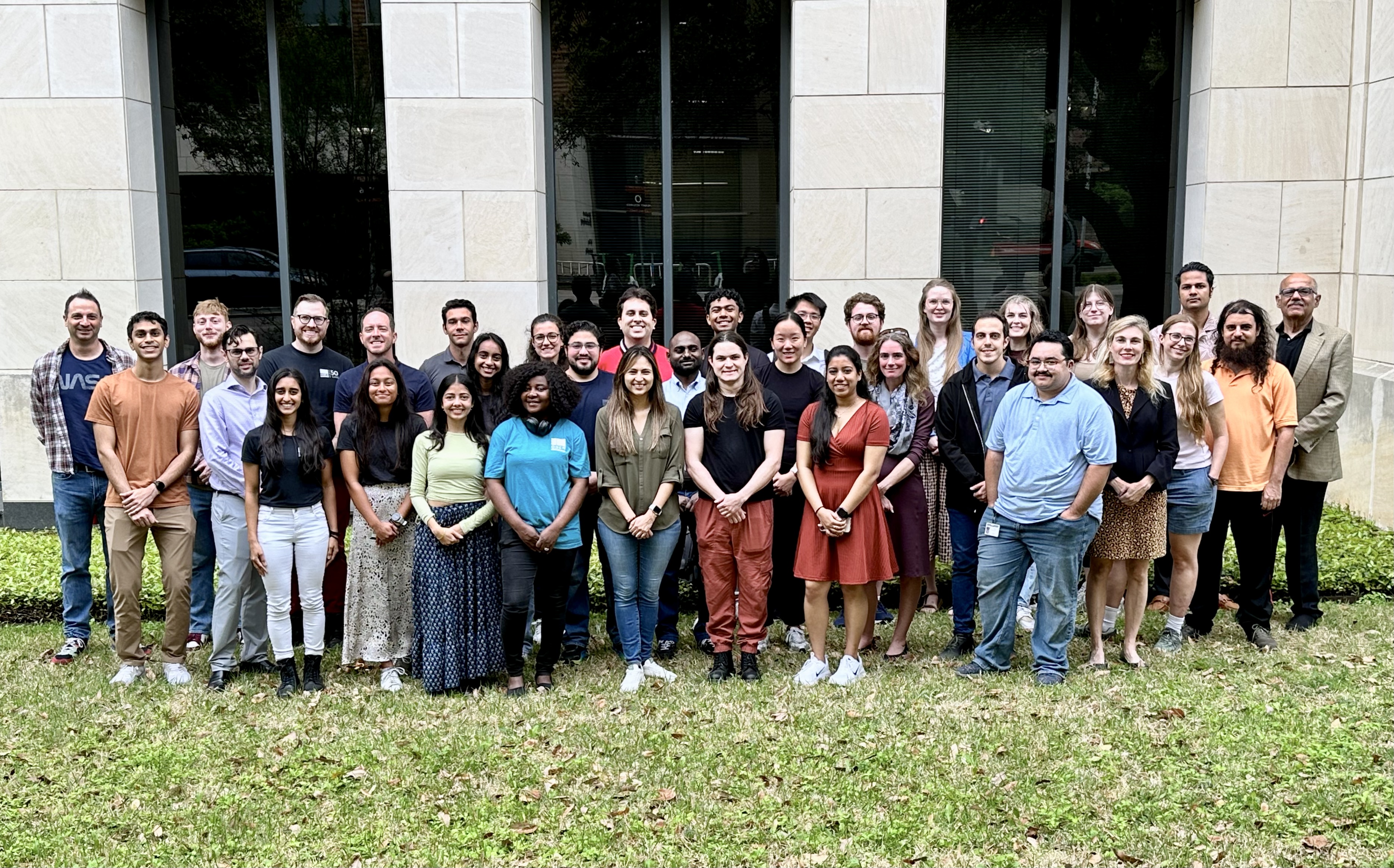
Center for Computational Oncology
The vision for the Center for Computational Oncology (CCO) is to develop biophysical models of tumor initiation, growth, invasion, and metastasis to establish a sound theoretical framework describing the hallmarks of cancer, and to use this knowledge to discover fundamental cancer biology, and develop tumor forecasting methods to optimize treatment and outcomes for the individual patient.
Directors
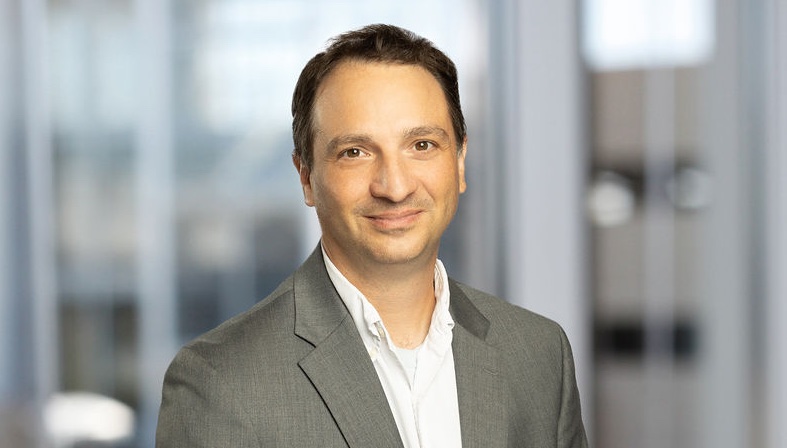
Tom Yankeelov
Faculty and Research Staff
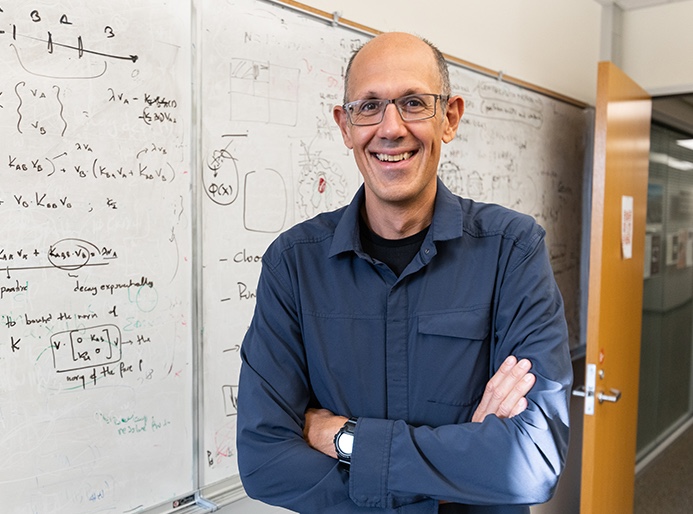
George Biros
Postdocs
Staff
Members outside the Oden Institute
Amy Brock, Caroline De Santiago, David Fuentes, Andrea Gardner, Tyler Jost, Shelli Kesler, Hugo Miniere
The center takes a unique approach to tumor model construction through its application of model inputs constrained by experiments and/or metrics tailored to each individual patient. Constructing individualized, patient-centric models offers several key advantages over conventional, population-derived metrics. Models naturally incorporate patient-to-patient heterogeneity – an approach that enables quantitative, testable predictions of tumor progression on each individual tumor and patient, allowing the model to be refined and/or verified.
News in brief
News
Oct. 16, 2026
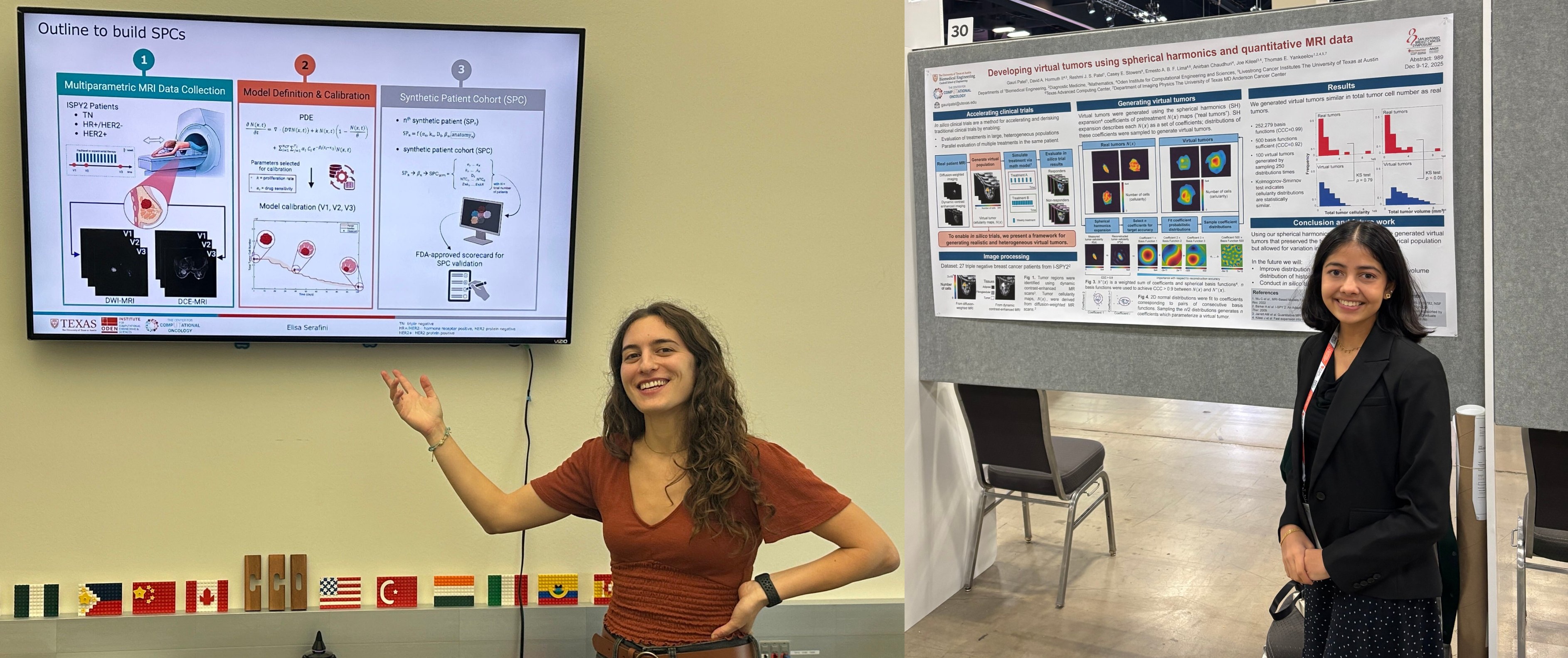
Testing Treatments Before the Trials: Oden Researchers Build Virtual Clinical Trials for Breast Cancer
Oden researchers Elisa Serafini and Gauri Patel explain how they’re building virtual clinical trials. These are computer simulations that test treatments on “synthetic patients” modeled on data from the I-SPY2 breast cancer trial, with the aim of helping researchers design faster, more effective real-world trials.
News
Oct. 16, 2026
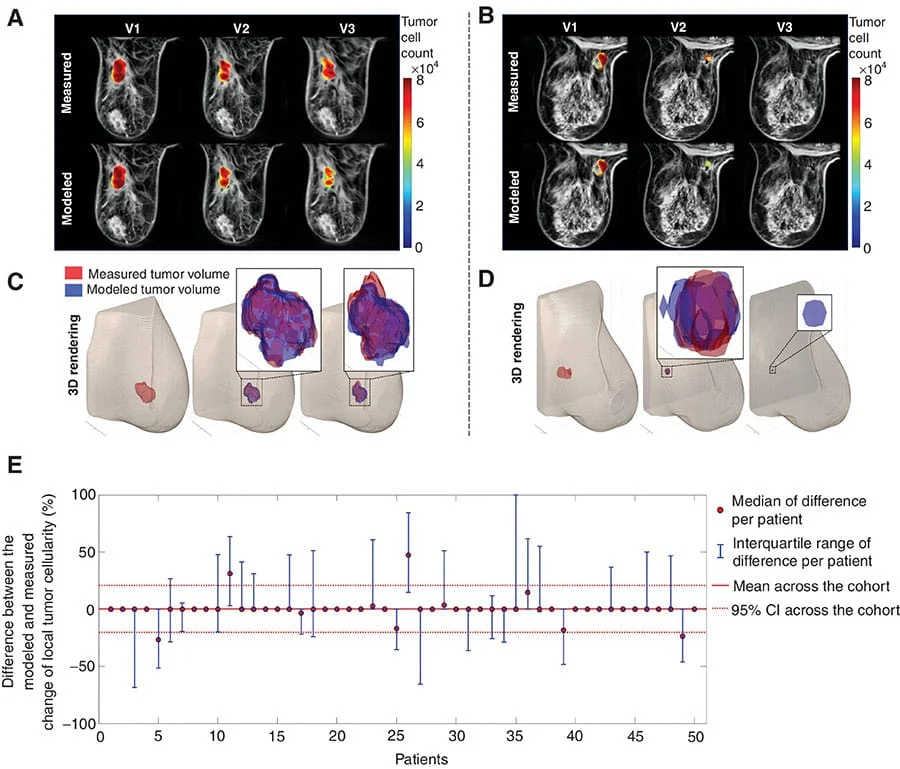
New Funded Projects from Joint Center for Computational Oncology Integrate Predictive Digital Twins to Improve Patient Outcomes
Since the program began in 2020, 29 projects have been funded, each of which bring together UT Austin and UT MD Anderson researchers. In addition to funding, project support includes compute hours at the Texas Advanced Computing Center.
Media Coverage
Sept. 18, 2026
AI Digital Twins Get Better and Better: Cancer in Crosshairs
Doctors and researchers are developing digital twins to help plan treatment for heart disease and possibly cancer care. The collaboration with Oden Institute Professor Tom Yankeelov and Chengyue Wu, PhD, at MD Anderson are looking towards the future of a potential clinical trial for cancer treatment.