Modeling life processes at the molecular and subcellular levels
Using physics-based principles and novel computational simulation techniques to advance basic biology
Computational biology is guided by the physical laws of microscopic equations of motion. Straddling quantitative biology with computational statistical mechanics, we conduct atomically detailed computer simulations that provide a comprehensive picture of biochemical and subcellular processes.
An Overview: Computational Biology
What is Computational Molecular Biophysics?
Biological processes are conducted at multiple temporal and spatial scales and are tightly regulated by the cell. Computational Molecular Biophysics focuses on fundamental and modulated processes at the subcellular and cellular levels. Many of these processes rely on molecular machines that conduct mechanical work, transmit timely signals, transport material across boundaries of compartments and execute biochemical reactions. Our research is firmly rooted in Hamilton’s equations of motions and statistical mechanics. These fundamental physical laws underpin computer simulations based on novel algorithms and theories developed to understand, predict and manipulate these processes at the atomistic level. We then conduct these simulations and test the predictions with experimental groups.
Current research areas
Examples of current research areas:
The mechanism of drug–kinase interactions
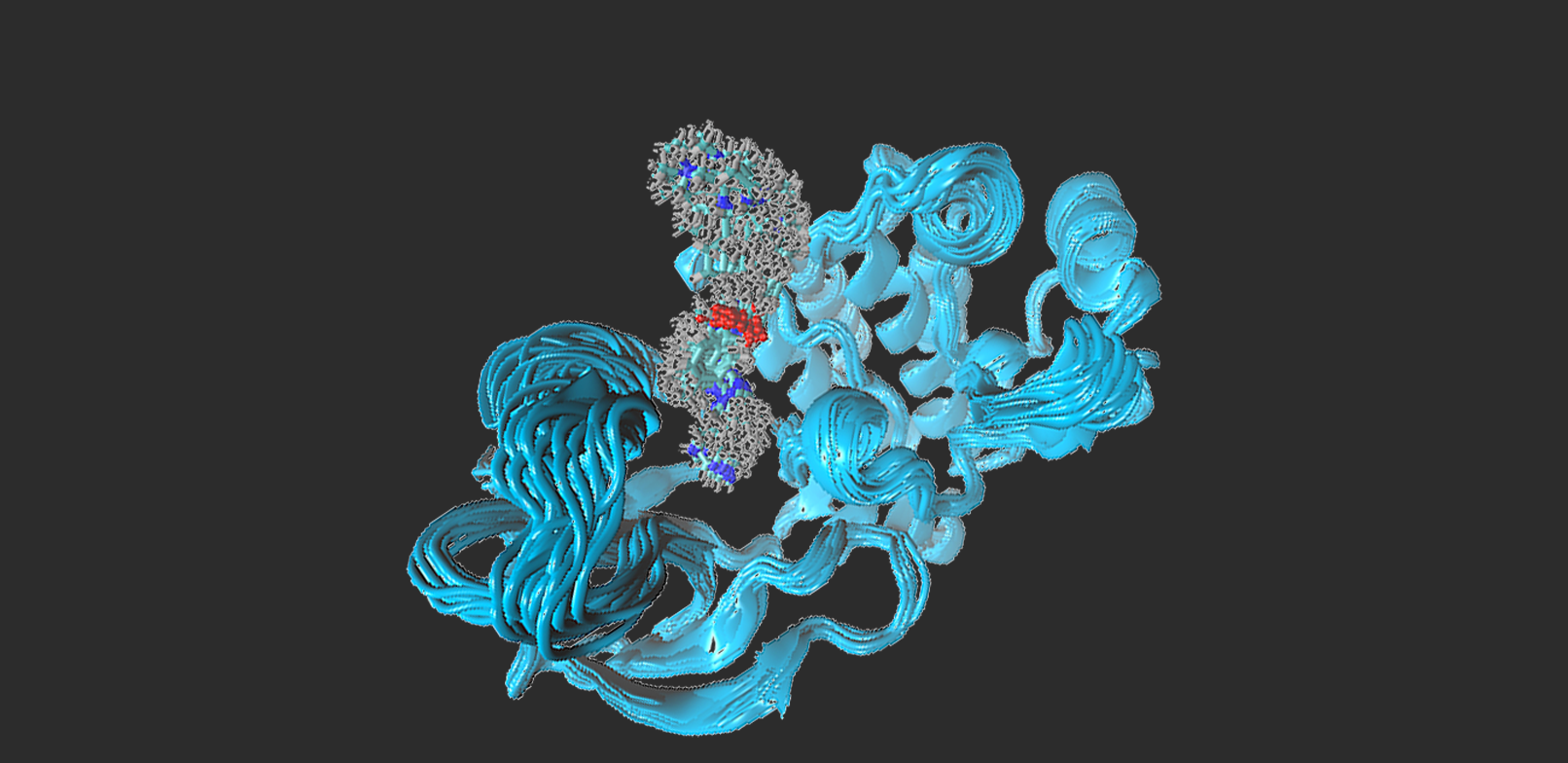
Protein kinases participate in many signaling processes, and their malfunction may cause diseases like cancer. Since there are many different kinases, it is hard to design a drug molecule that is specific to a particular pathway while also avoiding side effects. We study the drug-kinase interaction to understand the specificity of drug molecules. A success story is the drug ‘Imatinib’ that binds preferably to Abl kinase.
Cell-Penetrating Peptides
Cell-Penetrating Peptides (CPP) are small molecules that efficiently cross membrane barriers into cells and between compartments. We model the permeation process and consider the natural and synthetic design of these permeation agents.
Protein sliding along DNA
To read, synthesize and repair, protein machines slide along DNA. We point out the critical role counter ions play in the sliding process.
The operation of the Anthrax toxin
The anthrax toxin is a protein complex. It consists of a channel that enables the translocation of a protein called the Lethal Factor (LF) to the cytosol. Once in the cytosol, the LF causes significant damage. We model the translocation of the LF and use our Milestoning theory to conduct the simulations.
Working with partners
Current partnerships include collaborations with the Department of Chemistry and Department of Neuroscience at UT’s College of Natural Sciences, and with external groups and experts from University of Missouri, University of Rome, Sapienza, and the Hebrew University of Jerusalem.
Centers and Groups
To learn more about projects and people in Computational Biology, explore the centers and groups with research activities in this cross-cutting research area.
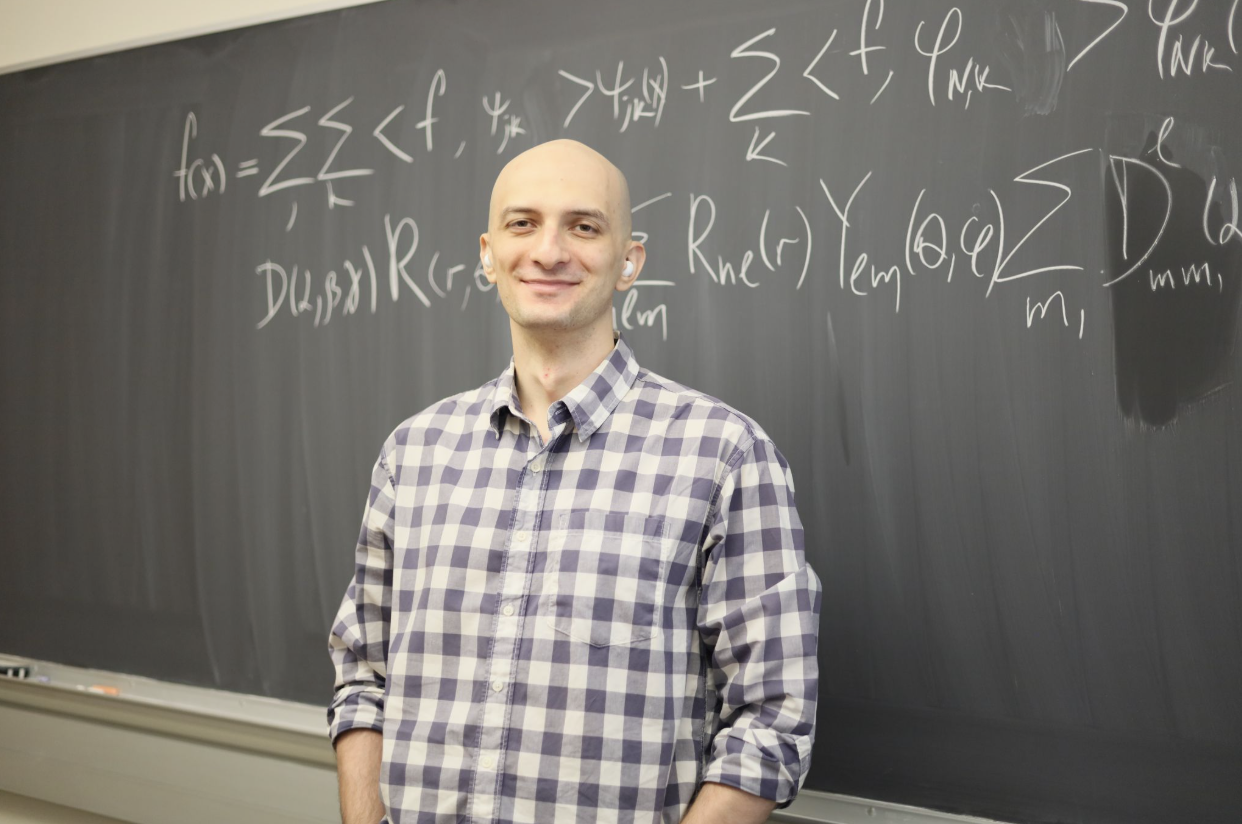
From Molecules to Medicine: Rethinking Drug Design - Profile Dzmitry Padhorny
Dzmitry Padhorny develops computational models that integrate physics and AI to improve prediction accuracy in complex problems, with the long-term goal of accelerating drug discovery and enabling rapid responses to emerging diseases.
Dima Kozakov, recently recruited to UT Austin’s Oden Institute and College of Natural Sciences, is leading a new research center focused on integrating AI and physics into drug discovery. His team aims to revolutionize cancer therapeutics by developing physics-aware AI models that accelerate personalized treatment design and translation into clinical impact.
UT Faculty Receive Texas Grants Igniting Research Innovation
Charles Taylor and Dima Kozakov are recipients of major grants from the State of Texas. Taylor received the Governor’s University Research Initiative (GURI) grant, and Kozakov received a grant from the Cancer Prevention and Research Institute of Texas (CPRIT).