
Announcements
Open Positions in Our Lab
Deep Learning for Structural Biology
Computational Biology and Protein Modeling
Click here for more information
AIxPhysics Drug Discovery Center
Computational Structural Biology
Our research group is at the forefront of developing a new generation of computational tools that integrate physics, artificial intelligence, and computational biology to transform drug design. We focus on two primary goals: developing mathematically elegant deep learning architectures that incorporate physical principles to model macromolecular structure and function at the genome scale, and applying these approaches to design therapeutic molecules with precise biological properties. By explaining disease mechanisms at the molecular level, our work aims to accelerate the drug discovery process, reduce costs, and unlock new possibilities for targeting complex conditions, particularly difficult-to-treat cancers.
Directors
Faculty and Research Staff
Students




Staff
Open Positions in our Lab
Deep Learning for Structural Biology
We are inviting highly qualified undergraduate or graduate students to join our research group at the Oden Institute, University of Texas at Austin. This is a competitive opportunity for individuals with proven deep learning expertise and a strong interest in pioneering applications in computational biology.
About Our Work
Our lab is internationally recognized in molecular and structural modeling, with a focus on structure prediction. We are developing next-generation deep learning architectures that have outperformed models like AlphaFold3 and Boltz in benchmark evaluations. Our success has been validated in blind prediction challenges such as CASP16, CAPRI, and other international competitions. We integrate physical and biological insights with the latest advances in machine learning to accelerate drug discovery and tackle critical challenges in molecular biology. Our research is funded by CPRIT (Cancer Prevention and Research Institute of Texas), MD Anderson Cancer Center, and several leading pharmaceutical companies. These collaborations support ambitious, interdisciplinary projects with clear biomedical impact.
Ideal Candidate Profile
We are looking for individuals with:
- Strong experience in deep learning, especially in:
- Geometric Deep Learning
- Diffusion Models
- Related areas such as graph neural networks, equivariant architectures, and generative modeling
- Proficient programming skills and familiarity with modern machine learning frameworks
- Interest or background in biological or structural applications (preferred but not required)
Why Join Us
- Be part of a globally competitive lab at the forefront of AI and biology
- Contribute to projects with real-world applications in healthcare and drug design
- Collaborate with a multidisciplinary team of experts in computational biology, machine learning, and biophysics
- Gain hands-on experience in validating AI-driven discoveries through partnerships with experimental labs
We welcome motivated individuals eager to work in a dynamic and impactful research environment. If this aligns with your interests and background, we encourage you to apply by emailing ernestglukhov@my.utexas.edu (please also CC dima.kozakov@oden.utexas.edu).
Computational Biology and Protein Modeling
We are inviting highly motivated undergraduate or graduate students to join our research group at the Oden Institute, University of Texas at Austin. This opportunity is designed for students with a strong background in biochemistry, molecular biology, biophysics, or a related field who are interested in applying computational methods to problems in protein structure, molecular interactions, and drug discovery.
About Our Work
Our lab is internationally recognized for research in molecular and structural modeling, with a particular focus on protein docking, protein-complex structure prediction, and computational drug discovery. We develop and apply next-generation deep learning models for predicting protein–protein, protein–peptide, antibody–antigen, and protein–ligand complexes. Our methods have demonstrated strong performance in benchmark evaluations and blind international prediction challenges, including CASP16 and CAPRI. We combine modern machine learning with physical, biochemical, and structural insights to study molecular recognition and accelerate the discovery of biologically and therapeutically relevant interactions. Our research is supported by the Cancer Prevention and Research Institute of Texas, MD Anderson Cancer Center, and collaborations with leading pharmaceutical companies. These partnerships provide opportunities to work on interdisciplinary projects with clear biomedical applications and to help validate computational predictions in collaboration with experimental laboratories.
Position Description
The selected candidate will work on the biological application, evaluation, and interpretation of our computational models. Depending on experience and project needs, responsibilities may include:
- Applying protein docking and structure-prediction methods to biologically relevant systems
- Preparing protein, peptide, antibody, and small-molecule structures for computational experiments
- Running, organizing, and analyzing large-scale computational studies
- Comparing predictions produced by different docking and structure-prediction tools
- Evaluating protein interfaces, binding modes, structural quality, and biological plausibility
- Working with structural and biological databases such as the Protein Data Bank, UniProt, Pfam, InterPro, and related resources
- Using tools such as PyMOL, ChimeraX, BLAST, Foldseek, and molecular modeling or docking software
- Designing computational experiments and selecting appropriate controls, benchmarks, and evaluation metrics
- Interpreting computational results in the context of known biochemical and experimental data
- Preparing figures, structural visualizations, reports, and presentations
- Collaborating with machine-learning researchers to identify model limitations and guide further development
- Working with experimental collaborators to propose testable hypotheses and prioritize computational predictions for validation
Ideal Candidate Profile
We are looking for individuals with:
- A strong background in biochemistry, molecular biology, structural biology, biophysics, bioinformatics, or a related discipline
- A solid understanding of protein structure and function, including:
- Amino acid properties and protein folding
- Protein domains and conformational changes
- Protein–protein and protein–ligand interactions
- Noncovalent interactions, binding interfaces, and molecular recognition
- Interest in protein docking, structural bioinformatics, and computational biology
- Experience using PyMOL, ChimeraX, or similar molecular visualization software
- Familiarity with biological and structural databases
- Ability to analyze scientific literature and connect computational predictions with biological mechanisms
- Basic scripting or programming experience, preferably in Python
- Comfort working in Linux environments and running computational tools from the command line
- Strong organizational skills and the ability to manage multiple computational experiments and datasets
- Careful attention to structural quality, data interpretation, and reproducibility
Prior experience with protein docking, molecular dynamics, structural alignment, virtual screening, high-performance computing, or machine-learning-based structure-prediction tools is helpful but not required. Training will be provided, but candidates should be motivated to learn new computational methods and work independently.
Why Join Us
- Work in a globally competitive research group at the intersection of structural biology, artificial intelligence, and drug discovery
- Apply state-of-the-art computational models to important biological and biomedical questions
- Gain practical experience with protein docking, structural analysis, biological databases, and large-scale computational experiments
- Collaborate with experts in computational biology, machine learning, biophysics, and experimental biology
- Contribute biological insight that directly informs the development of new structure-prediction methods
- Participate in projects supported by major research institutions and pharmaceutical partners
- Gain experience preparing research results for publications, presentations, and international scientific challenges
- Help translate computational predictions into experimentally testable discoveries
We welcome motivated students who are excited to combine their knowledge of biochemistry and molecular biology with modern computational approaches. Candidates do not need to be experts in machine learning, but they should be interested in using advanced computational models to study proteins, molecular interactions, and biologically important complexes.
To apply, please email ernestglukhov@my.utexas.edu (please also CC dima.kozakov@oden.utexas.edu). Please include a CV, a brief description of your research interests and relevant experience, and any examples of previous computational or structural biology work.
News in brief
News
July 22, 2026
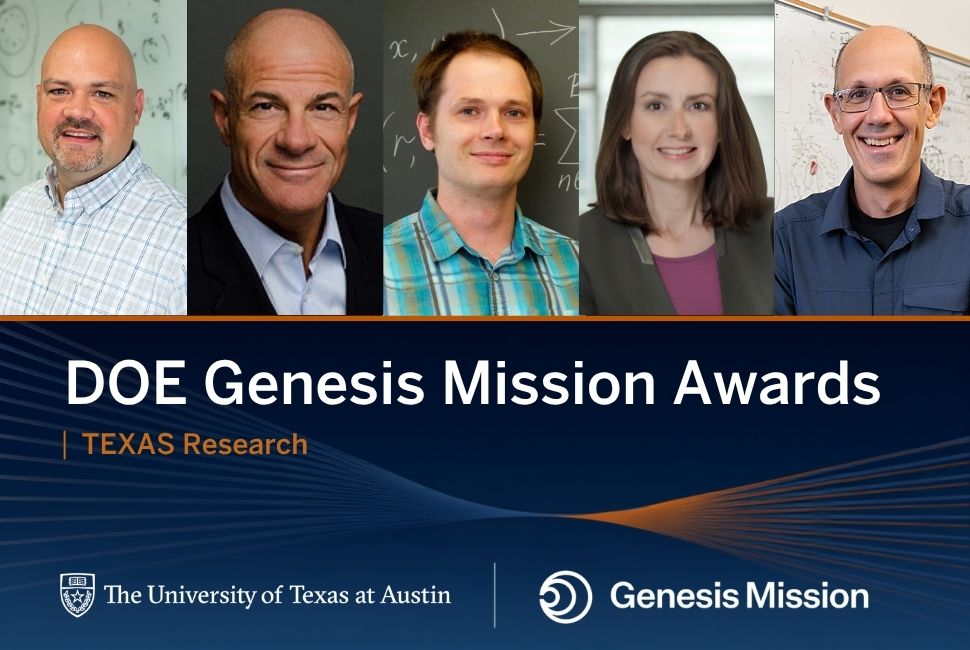
Oden Institute Faculty Selected for Four Projects in Department of Energy's AI-for-Science "Genesis Mission"
Oden Institute faculty will be contributing to four projects that address national priorities in the areas of rare earth minerals, digital twins for fusion energy reactors, additive manufacturing, and digital twins for efficient nuclear energy.
Profile
June 24, 2026
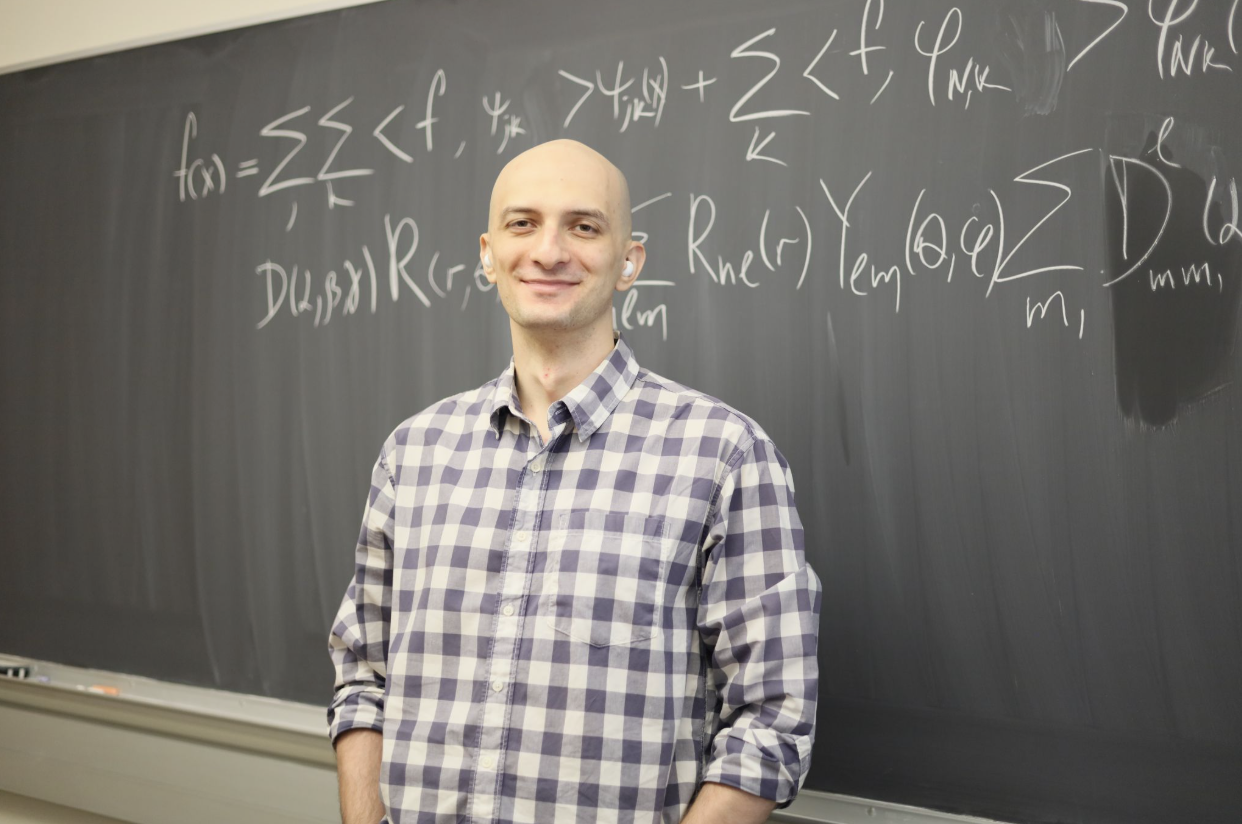
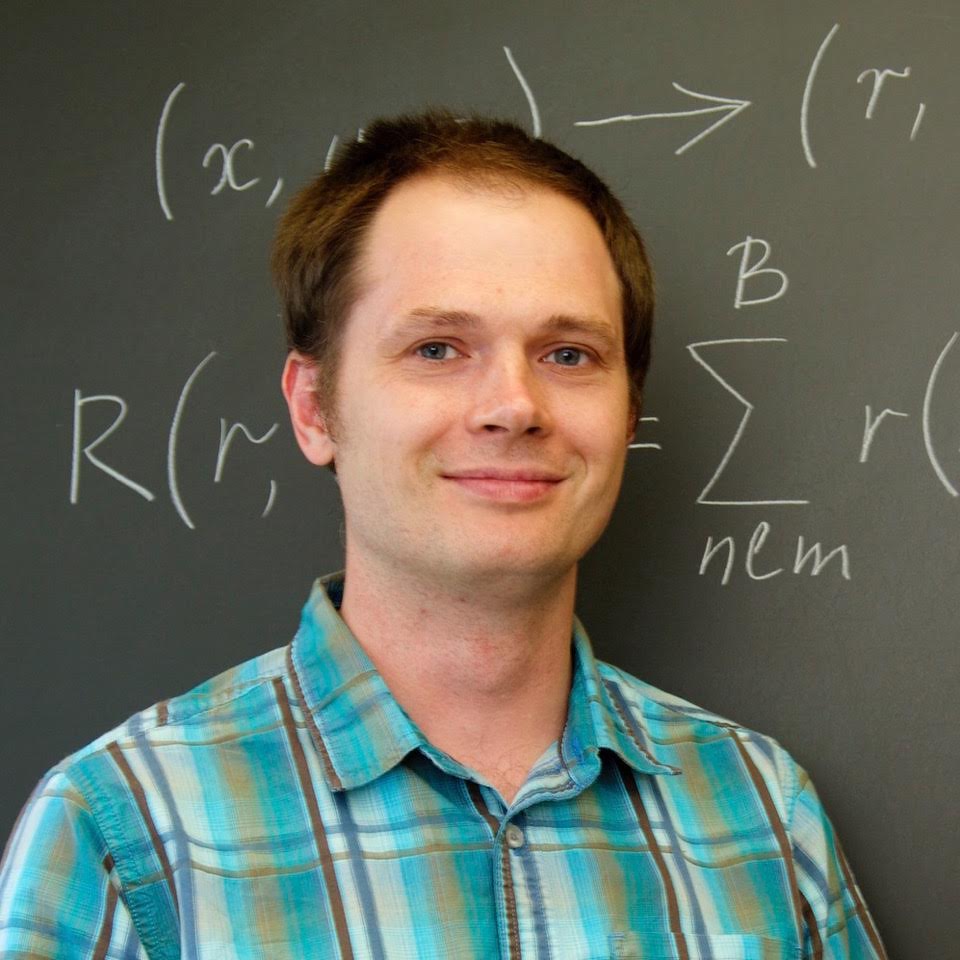
From Molecules to Medicine: Rethinking Drug Design - Profile Dzmitry Padhorny
Dzmitry Padhorny develops computational models that integrate physics and AI to improve prediction accuracy in complex problems, with the long-term goal of accelerating drug discovery and enabling rapid responses to emerging diseases.
News
Oct. 15, 2025
5 Questions for Dima Kozakov
Dima Kozakov, recently recruited to UT Austin’s Oden Institute and College of Natural Sciences, is leading a new research center focused on integrating AI and physics into drug discovery. His team aims to revolutionize cancer therapeutics by developing physics-aware AI models that accelerate personalized treatment design and translation into clinical impact.